
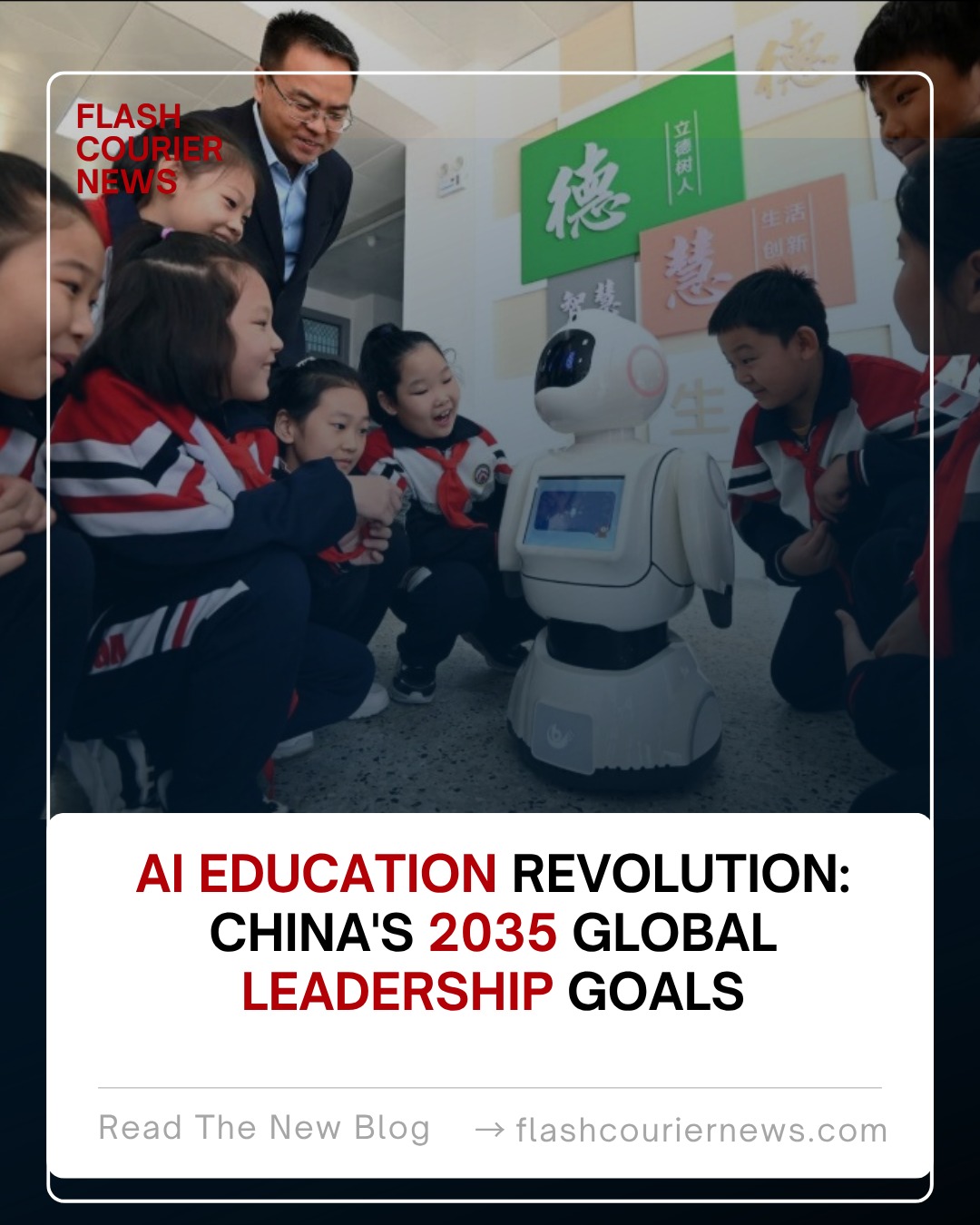
The revolution in AI teaching is happening now, not in the distant future. China is also taking a bold step to take control of this area. China wants to lead the world in artificial intelligence (AI) by 2035. However, their approach goes beyond simply sponsoring research centers and developing better computers. Instead, to produce a generation proficient in AI, China is radically changing its entire education system, from age 6 through university.
The most comprehensive national education reform in decades is China’s AI education revolution. China hopes to have the largest AI-literate labor force in the world by 2035 and possibly take the lead in the global AI market.
What Pakistan and the rest of the world can learn from China’s three-pillar AI education system, as well as how it functions at each grade level.
China’s Vision — Education as the Foundation of Power
China considers that education is the source of true power. Their reasoning is straightforward but effective:
“If you want to be a leader in AI, you must train your workforce from an early age.”
China unveiled its Three-Pillar AI Education System in April 2026 as a comprehensive national plan to integrate AI education into all educational levels.
This program is neither recommended nor optional. Every school, teacher, and student in the nation must take it.
🇵🇰 Pakistani perspective: This degree of national dedication is astounding to me as a Pakistani observer. In several rural schools, we struggle to offer basic internet and electricity. Teachers must already be certified in AI in China. There is a strategic as well as an economic divide between the two nations.
The Three Pillars of China’s AI Education System
China’s system rests on three interconnected pillars:
| Pillar | Description | Why It Matters |
| AI-Trained Teachers | Mandatory AI certification for all educators | Teachers cannot teach what they don’t know |
| Modern Teaching Methods | AI-based pedagogy, not traditional memorization | How you teach matters as much as what you teach |
| AI in Curriculum | Required AI education from age 6 through university | Builds fluency over 12+ years |
AI-Trained Teachers (Mandatory Certification)
ITeachers, not pupils, are where China is starting.
Requirements for all educators:
- Before instructing them, one must acquire AI skills.
- An AI certification exam must be passed.
- No certification equates to an invalid teaching license.
This guarantees that every school has a teacher who is not just reading from a textbook but truly knows AI.
Many nations purchase tablets and PCs for their students but neglect to provide teacher training. China has undone that error.
Modern Teaching Methods (AI-Based Pedagogy)
AI-powered cognitive learning is replacing traditional memorization.
Teachers now need to become proficient in:
- Make use of AI-based research methods prior to, during, and following classes.
- Make intelligent lesson plans driven by AI.
- Change from “memorize this fact” to “think critically about this problem.”
OLD WAY: Memorize dates, formulas, and definitions.
NEW WAY: Use AI tools to analyze, create, and solve real problems.
AI in Curriculum (From Age 6)
China is increasingly requiring AI education beginning in early childhood.
How China teaches AI at each level:
| Grade Level | Age | Students Learn |
| Class 1–2 | 6–8 | Decision-making models (decision trees); introduction to neural networks, and how AI systems operate |
| Class 3–4 | 8–10 | Developing AI-based projects; using AI to generate text, graphics, and audio; understanding how AI tools work |
| Class 5–6 | 10–12 | Creating AI agents (automated systems); real-world AI applications, and innovative AI projects |
| Middle School | 12–15 | Data collection; AI model training; implementing AI systems — the complete AI workflow |
| High School | 15–18 | Creating AI agents (automated systems); real-world AI applications; innovative AI projects |
| University | 18+ | AI required for every student—science AND arts majors alike |
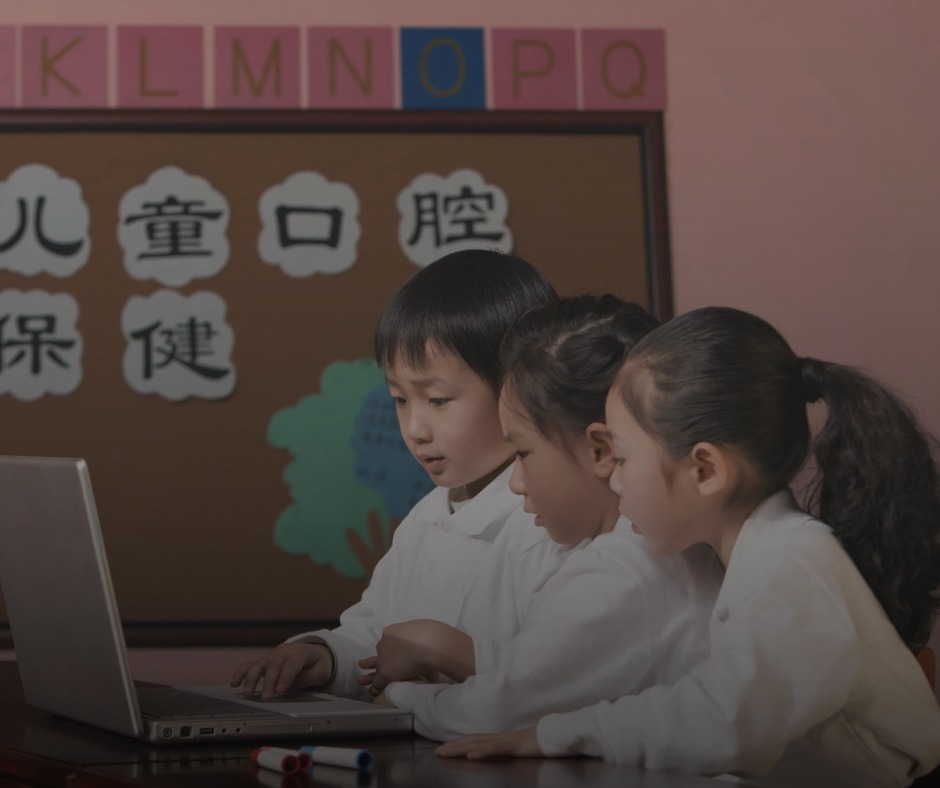
🇵🇰 Reality check for Pakistan: Even top-tier computer science students in Pakistan might not come into contact with AI until their senior year. A ten-year-old in China is studying neural networks. Chinese students will have studied AI for more than 15 years by the time they graduate from college in 2035. Pakistan cannot afford to overlook this disparity.
Why This Matters Beyond China
China is not the only country involved in the AI education revolution. The whole economy will be impacted.
By 2035, China aims to produce the following:
- Millions of AI-literate graduates
- A workforce capable of developing, implementing, and enhancing AI systems on a large scale
- AI skills in every industry, including the military, agriculture, and medicine
What this implies for other nations:
- You will lag if your nation does not make investments in AI education.
- Chinese workers will be hired for jobs requiring AI expertise.
- China will write the global AI standards.











Leave a Reply