
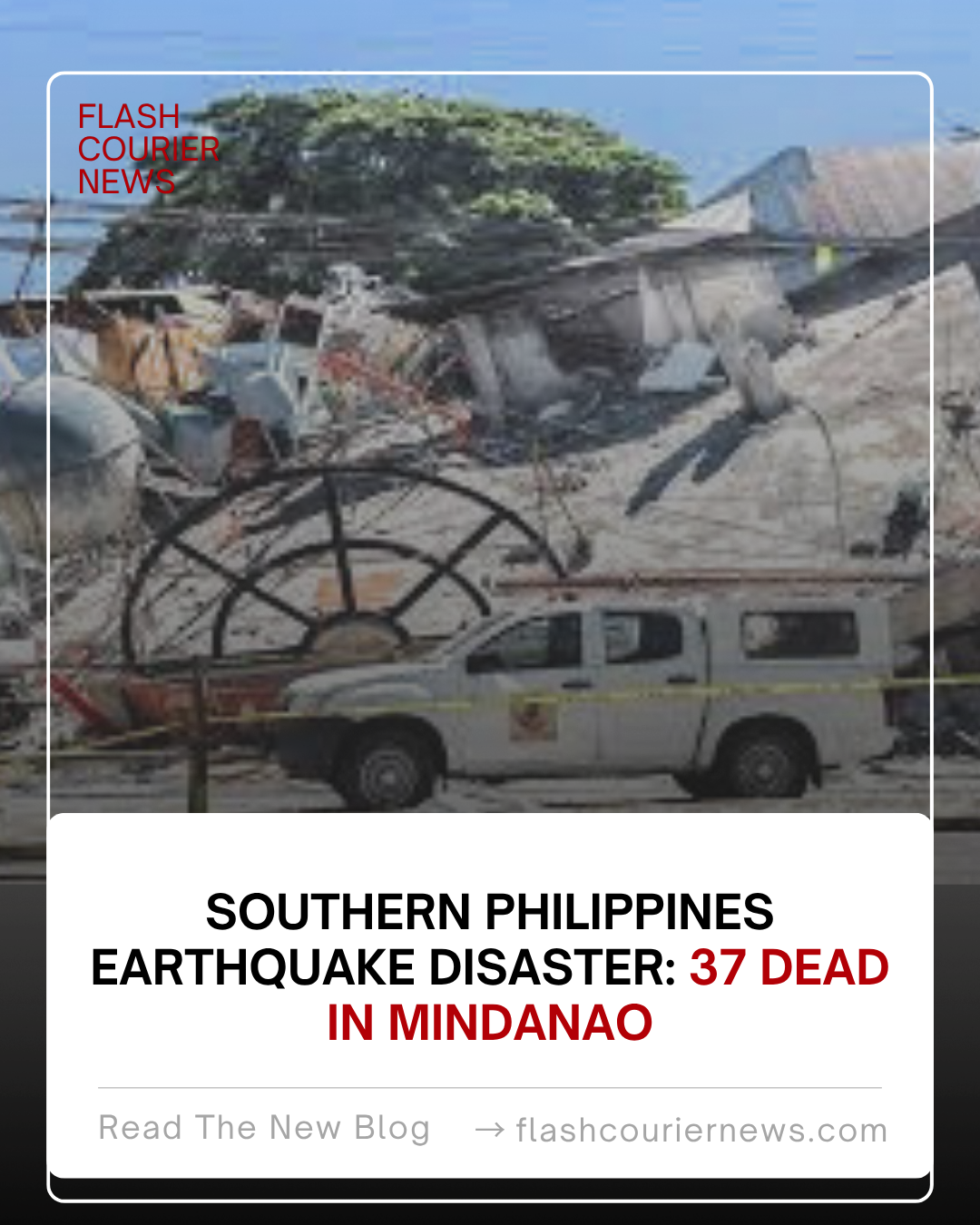
A Catastrophic Tremor Shatters the Southern Provinces
A catastrophic natural disaster gripped the southern Philippines early Monday morning. A massive 7.8-magnitude earthquake violently struck the coast of Mindanao Island at exactly 7:37 AM local time. The tremendous geological shift originated thirty-three kilometers deep along the highly volatile Cotabato Trench.
Many urban and coastal towns experienced widespread panic as a result of this abrupt, intense earth shaking. During morning school assemblies, terrified locals fled their houses and classrooms into public areas. As a result, as the country evaluates the structural damage, this terrible earthquake calamity in the southern Philippines dominates international news headlines.
According to first responders, at least 37 people have died in the area as a result of the devastating incident. In crowded business areas, hundreds of people suffered serious injuries from falling concrete and collapsed buildings. As rescuers clear debris fields, emergency search teams anticipate that the number of casualties will increase.
Deconstructing the Scale of Regional Devastation
The strong earthquake completely destroyed numerous low-rise business structures, family residences, and public educational institutions. A large commercial complex’s concrete outside walls in General Santos City crumbled straight onto the city’s streets. Journalists have verified witness footage of a busy local restaurant’s upper floor entirely collapsing.
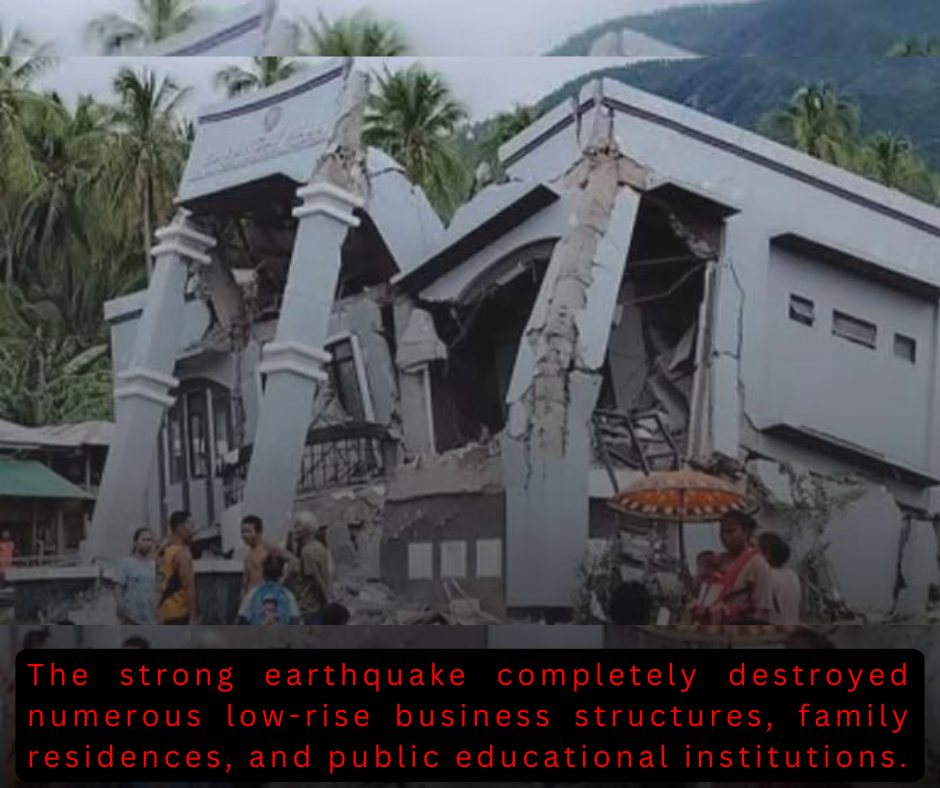
The powerful earthquakes severely destroyed infrastructure in Davao del Sur and neighboring municipalities. While students gathered outdoors for their morning ceremony, parts of a nearby high school fell.
In the Sarangani region, massive landslides caused by the intense shaking buried entire mountain communities. Local disaster-mitigation officials reported thirteen deaths in Glan municipality alone from these abrupt earth movements. Broken pipelines and collapsing bridges currently cut off many isolated rural towns from essential emergency services.
Tsunami Waves and Secondary Hazards Trigger Urgent Evacuations
Government authorities immediately issued critical tsunami warnings throughout nine coastal provinces as a result of the offshore tectonic breach. Along susceptible shorelines, sea level monitoring stations recorded breaking tsunami waves as high as 1.5 meters. Authorities promptly evacuated thousands of households to higher ground from coastal communities in Sultan Kudarat and Sarangani.
| TSUNAMI MONITORING STATION DATA | ||
| LOCATION | WAVE HEIGHT RECORD | EVACUATION STATUS |
| Kiamba Coast Maasim Port Mati City | 1.5 Meters 1.2 Meters Less Than 1 Meter | Full Coastal Evacuation Complete Zone Clearance Precautionary Alert |
| Source: DOST-PHIVOLCS Sea Level Monitoring Report (2026) | ||
The devastating waves wrecked numerous wooden fishing boats and inundated low-lying coastal towns. Luckily, most coastal people were able to flee the approaching waters thanks to the prompt official radio alerts. After six hours of nervous waiting, authorities eventually lifted the widespread area tsunami warnings.
High-magnitude aftershocks that continue to shake vulnerable structures pose a serious threat to inland areas. The Philippine Seismic Network already detected over a hundred different aftershocks in the impact zone. Geologists caution that previously broken concrete structures and bridges may collapse as a result of these ensuing tremors.
Crisis Management Responses from Capital and Allies
President Ferdinand Marcos Jr. rallied all government disaster response efforts and promptly canceled courses statewide. The national government instructed military personnel to deliver emergency medical supplies to destroyed southern airports. To accommodate thousands of displaced individuals, government organizations are erecting makeshift tent cities.

Hospital professionals in General Santos City treat hundreds of injured people in outdoor medical tents. Patients are afraid that the hospital buildings may collapse beneath them, so medical staff shifted beds outside. To assist seriously traumatized public school kids, the Philippine Red Cross dispatched psychological first aid teams. International partners swiftly promised significant logistical help and humanitarian supplies to aid with the recovery. In order to deploy emergency search and rescue resources, the US administration is working closely with Manila. Additionally, the archipelago received rapid financial and technical support from France, Japan, and New Zealand.
Editor’s Perspective: A Critical Wake-Up Call for Pacific Ring Nations
In my opinion, this tragic event serves as an indisputable cautionary tale about urban growth in seismically active areas. In General Santos City, the fall of contemporary commercial buildings exposes glaring weaknesses in structural enforcement. When bad engineering decisions deliberately raise the final mortality toll, we cannot just blame nature.
Strong earthquakes strike Mindanao commonly, but the region’s infrastructure remains dangerously unprepared for a significant 7.8-magnitude catastrophe. This particular catastrophe demonstrates the need for local governments to implement more stringent building regulations consistently. Corrupt development approvals directly threaten human lives during significant seismic ruptures along the Pacific Ring of Fire.
Tectonic Rupture —> Strict Seismic Engineering —> Minimal Infrastructure Damage
Tectonic Rupture —> Poor Code Enforcement —> Widespread Structural Collapse
This catastrophe, in my opinion, will lead to intense political discussions over infrastructure spending in the southern regions. Leaders in the south sometimes lament that they receive less funds for development than those in the north, such as Luzon. President Marcos Jr. needs to fulfill his pledge that the national government will not abandon Mindanao.
During this massive national catastrophe, the Filipino people’s incredible fortitude will surely be on display. But survival shouldn’t rely just on one’s own fortitude and communal service. The state must immediately make significant investments in structural reinforcement and long-term earthquake preparedness initiatives.
Tectonic History and the Cotabato Trench Vulnerability
One of the deepest oceanic tunnels in the western Pacific is located on Mindanao’s southern coast. Deep beneath, tectonic subduction generates tremendous energy at the Cotabato Trench, a significant plate boundary. To review historical seismic logs and global geological data, consult the United States Geological Survey Earthquake Hazards Portal.
| HISTORICAL MINDANAO EARTHQUAKES | ||
| YEAR OF EVENT | MOMENT MAGNITUDE | PRIMARY IMPACT TYPES |
| 1976 Event 2023 Event 2026 Event | Magnitude 8.0 Magnitude 6.7 Magnitude 7.8 | Massive Tsunami Devastation Moderate Structural Damage Landslides and Urban Rupture |
History demonstrates that this particular trench causes some of the most catastrophic earthquakes in island history. A fabled tremor in 1976 caused a catastrophic tsunami that killed thousands of people along the Moro Gulf. The latest incident reminds scientists that the subduction zone still holds extremely dangerous potential.
Seismologists stress that teams must continuously monitor tectonic faults to forecast future regional rupture patterns. Mindanao is particularly vulnerable to landslides due to its unstable volcanic soil and Steep Mountain slopes. Every significant earthquake causes the ground to become unstable, posing persistent risks for the upcoming rainy season.
The Long Road to Rehabilitation and Regional Recovery
The long-term recovery effort will require billions of pesos and several months of coordinated community reconstruction. Local planning boards must redesign public markets, schools, and transportation systems using contemporary earthquake engineering. Prolonged power outages and disturbed agricultural supply chains are causing acute problems for the local economy.
- Inspect Public Facilities: Structural engineers must evaluate every standing school and hospital before reoccupation.
- Restore Power Grids: In order to restore municipal water services, repair personnel must reconstruct fallen electrical pylons.
- Reinforce Mountain Slopes: Environmental agencies must map landslide tension cracks before the monsoon rains arrive.
- Fund Small Businesses: To assist retailers in rebuilding their damaged stores, the central bank could provide low-interest loans.
In the end, when communities rebuild from the devastation caused by this disaster, a common pain will bring the country together. Hostile geological forces will not break the resilient character of the southern provinces. Strict technical standards, foreign assistance, and thorough preparation can help Mindanao recover from this awful incident.











Leave a Reply