
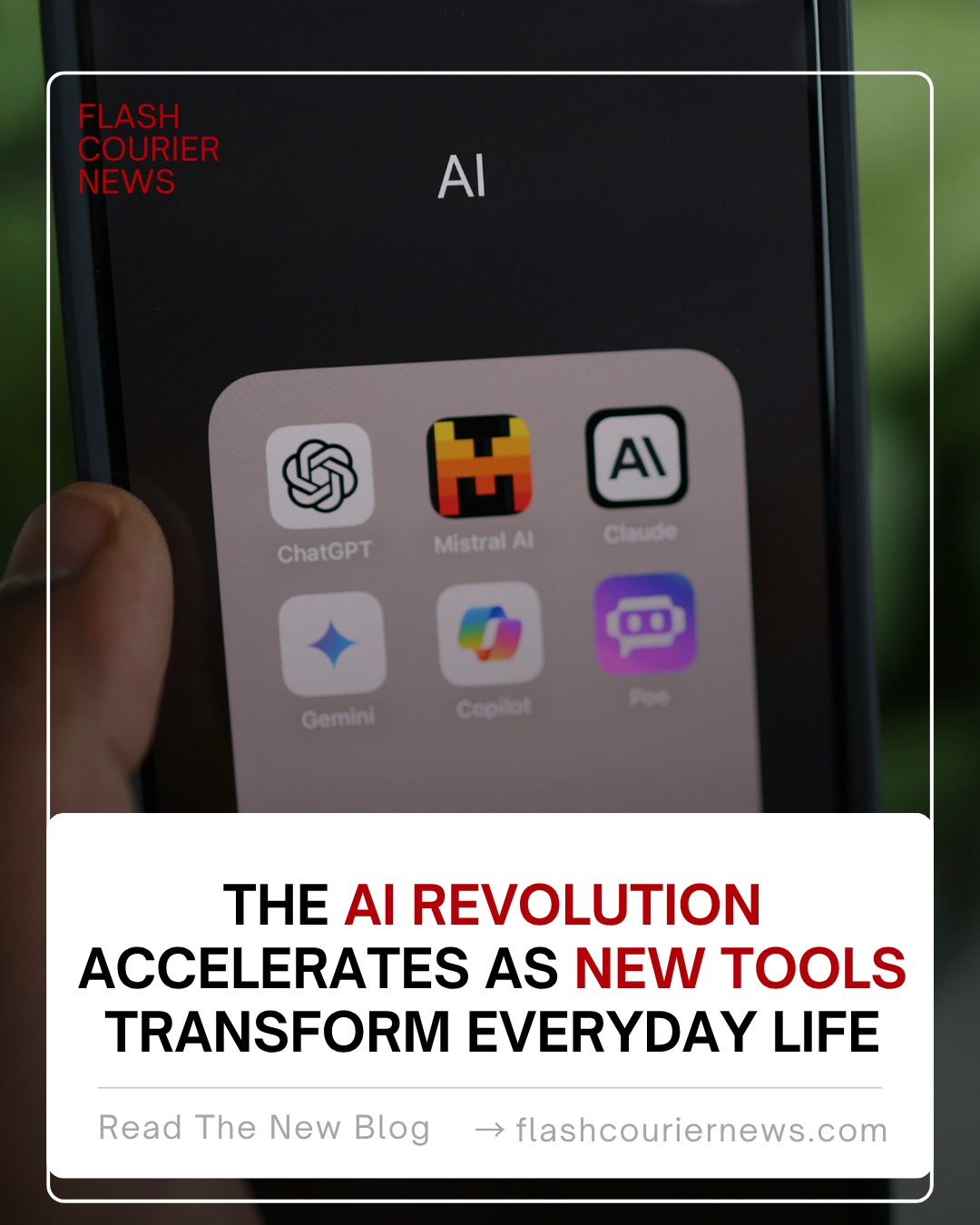
Artificial intelligence is no longer only a futuristic concept explored in science fiction movies or research laboratories. The AI Revolution Everyday Life has slowly taken center stage in daily life over the last few decades. AI-powered products are becoming a part of everyday life all across the globe, from how people work and communicate to how they buy, learn, and amuse themselves in practical life.
The speed at which this technological change is occurring is what makes it noteworthy. Monthly, new AI platforms and technologies emerge that provide quicker answers within seconds to the issues that formerly needed hours of human labor. AI is rapidly turning into a basic need for many people and companies.
The technology raises concerns about job security, privacy, and the long-term relationship between humans and robots, even while it also presents many abilities.
AI in Daily Tasks
The absence of difficulty with which AI has permeated daily life is one of the most obvious indicators of the transformation. Many individuals engage with AI on a daily basis without even being aware of it and due to laziness. Smart speakers and smartphones with voice assistants can deliver us real-time information, make reminders, answer questions, and operate household appliances.
Professionals, students, and content producers are increasingly using AI-powered writing tools and becoming used to it. These technologies may be used for idea generation, article drafting, information summarization, and even every language translation. Things that used to take hours to study and edit may now be finished much more quickly.
AI is assisting humans in managing their personal life in addition to make productive. Smart apps track exercise and health progress, help with budgeting, and even suggest food plans based on personal tastes. These tools offer efficiency and convenience that were hard to anticipate ten years ago for those with hectic schedules.
Changing the Contemporary Workplace
The workplace is perhaps where AI has had the biggest impact. AI systems are being used by businesses in a variety of sectors to increase productivity by automating difficult work. Intelligent software can now undertake routine tasks like data input, customer service answers, and easily analysis data.
Employees may now concentrate on more difficult tasks that call for creativity, judgment, and problem-solving abilities.
The emergence of technology has spurred continuous discussion about the nature of work in the future. As machines grow increasingly adept at carrying out mundane activities, certain occupations that primarily depend on them may eventually vanish.
However, analysts contend that AI will also open up new job prospects. AI development, data analysis, cyber security, and digital management positions are already in great demand. It will be difficult for employees to adjust to these shifts by picking up new skills and remaining adaptable in a changing labor market.
A Different Approach for Education
Another area that is rapidly changing as a result of artificial intelligence is education. AI-powered learning platforms can now analyses a student’s progress and modify lessons accordingly.
Rather than using a one-size-fits-all approach to teaching, these systems can create personalized learning experiences where students who need more time to understand a topic can receive extra guidance, while those who grasp concepts quickly can advance at a faster pace.
AI-driven technologies are also helping teachers. While learning analytics offer insights into student performance, automated grading systems can assess assignments more effectively. This enables teachers to see difficult pupils early on and provide focused assistance.
AI can be a strong aid that improves the learning environment for both instructors and pupils, even if it will never fully replace the function of teachers.
Modifying the Digital Experience
People’s interactions with digital platforms are also changing as a result of artificial intelligence. AI algorithms are frequently at work in the background as people surf social media, watch movies, or shop online. E-commerce sites utilize user behavior analysis to provide product recommendations based on individual preferences.
Streaming services make recommendations for films, music, and television series based on past viewership. Algorithms created to show information that people are most likely to interact with are used to curate social media feeds.
Online encounters may be more efficient and pleasurable with this degree of customization. But it also raises questions about how big of an impact algorithms have on what individuals see and use.
Overcoming Social and Ethical Obstacles
Artificial intelligence has numerous benefits, but its quick development has also brought with it a number of difficult problems. Due to AI systems’ heavy reliance on massive volumes of data for proper operation, privacy problems have gained increased attention.
The application of AI in decision-making processes raises additional ethical concerns. For instance, openness and fairness become crucial concerns when algorithms are utilized in recruiting, financial services, or law enforcement.
The dissemination of false information is another developing issue. Text, photos, and videos created by AI can occasionally make it challenging to discern between authentic and fake material.
As a result, governments and tech firms are starting to create rules and policies to guarantee ethical AI development. The goal of these initiatives is to strike a balance between accountability and creativity.
Imagining the Future
One of the biggest technical developments of the contemporary period is the quick development of artificial intelligence. AI is altering society at almost every level, from streamlining daily jobs to revolutionizing industries.
Although there are many advantages, how this technology is used will determine its long-term effects. It will be crucial to strike the correct balance between human control, innovation, and ethics. The fact that AI is not a fad is still evident. People, companies, and governments will all need to adjust as technology advances.
One of the most crucial abilities of the digital era in the years to come may be comprehending and using artificial intelligence.















Leave a Reply