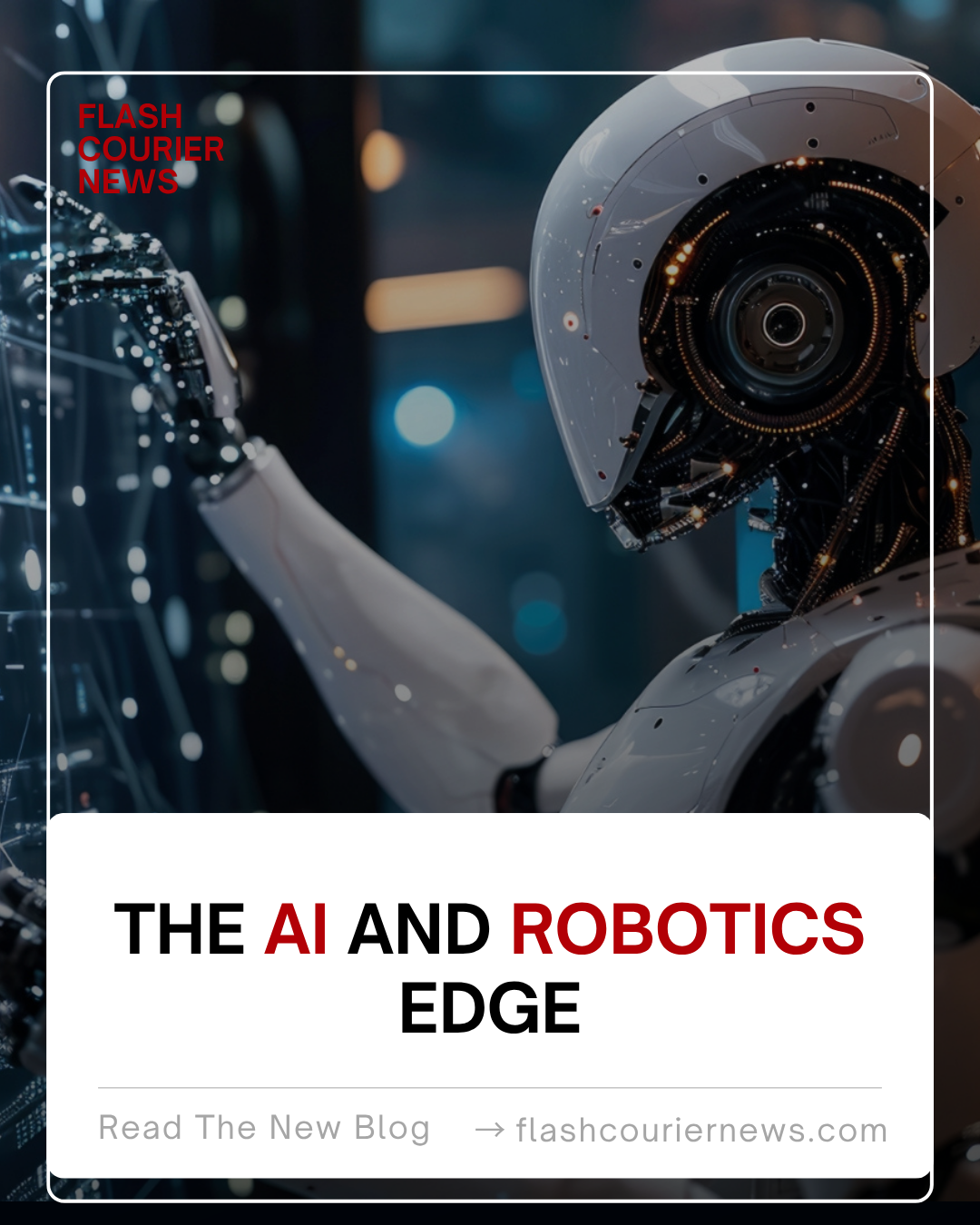
The AI and Robotics Edge is the greatest benefit that firms and individuals will have in 2026. Software and hardware are finally operating as one unified brain, signaling a fundamental shift that we are currently observing. This combination makes it feasible for machines to join our complex, unpredictable everyday lives and escape their rigid cages. The future generation of global productivity and creativity will be guided by those who are skilled in this technology field.
The AI and Robotics Edge allows businesses to move past the limits of obsolete, pre-programmed automation solutions. Now, physical intelligence is applied by intelligent robots to sense their environment and make decisions immediately. Irrespective of the setting, they no longer just execute a sequence of repetitive instructions. Instead, they adapt from every physical interaction they have at work and respond to new challenges and issues.
The AI and Robotics Edge creates a world where mechanical precision and human ingenuity creative operate in perfect sync. Through this partnership, we can readily tackle major problems in sustainable manufacturing, healthcare, and construction. In the future, humanity will focus on bold ideas while robots handle the dull and risky tasks. Let’s explore how several aspects of our contemporary world are being reshaped by this powerful alliance.
Physical AI: Giving Machines a Brain
When we examine how machines now perceive the environment, the AI and Robotics Edge is most clear. Robots can “see” and “reason” like humans because to high-speed processors. Simple tasks like grabbing a random object are no longer hard for these machines. Before they contact something, they assess its shape, weight, and texture. They are reliable partners in busy warehouses and laboratory settings because of this deep awareness.
Hardware can improve by making mistakes thanks to the AI and Robotics Edge. Before robots ever step onto a real manufacturing floor, engineers prepare them in virtual spaces using digital twins. This method prevents costly physical equipment breakage and conserves thousands of hours. After training, the robots gain a level of skill that formerly required years of development. We are observing the rise of machines that truly grasp the laws of physics.
The Rise of Autonomous Systems
Right now, the AI and Robotics Edge is transforming international freight shipping. These days, autonomous trucks have better safety ratings than human drivers when navigating long roadways. Even after a full night of driving, these vehicles never get weary or lose focus. They detect hazards miles before they become a major issue by utilizing a network of sensors. Our supply chains keep running without unnecessary delays or accidents due to this technology.
Additionally, a new generation of delivery drones in our communities are run by the AI and Robotics Edge. These small flyers can deliver packages in a few minutes while dodging trees and power cables. In order to conserve energy and reach their target faster, they continuously optimize their flight trajectories. This change lessens the amount of traffic on our roads and each delivery’s carbon footprint. It demonstrates how intelligent devices may greatly improve the convenience of our daily life.
Precision in Healthcare and Surgery
The extraordinary mechanical stability of the AI and Robotics Edge is preserving lives in hospitals. Robotic arms are now utilized by surgeons to perform operations with deep and minute accuracy. To ensure that every incision is perfect, these robots removes any shakes in human hands. Patients globally gain from smaller incisions and significantly faster recovery periods as a result. Using high-speed data connections, doctors can conduct these surgeries from a far distance.
Through mobile assistance bots, the AI and Robotics Edge provides nurses and medical staff constant help. The heavy lifting required in moving patients and large item is managed by these robots. This allows medical professionals to focus more on their patients’ emotional care. At last, technology is being applied to bring the “human touch” back to the heart of healthcare. It’s a wonderful example of how technology can enhance our innate empathy.
A Future of Collaboration
Through mobile assistance bots, the AI and Robotics Edge gives nurses and medical personnel ongoing help. The strenuous lifting involved in transporting patients and delivering bulky products is taken care by these robots. This enables medical practitioners to devote more attention on their patients’ emotional needs. Finally, technology is being used to return the “human touch” to the center of healthcare. It’s a beautiful demonstration of how technology might strengthen our innate empathy.