
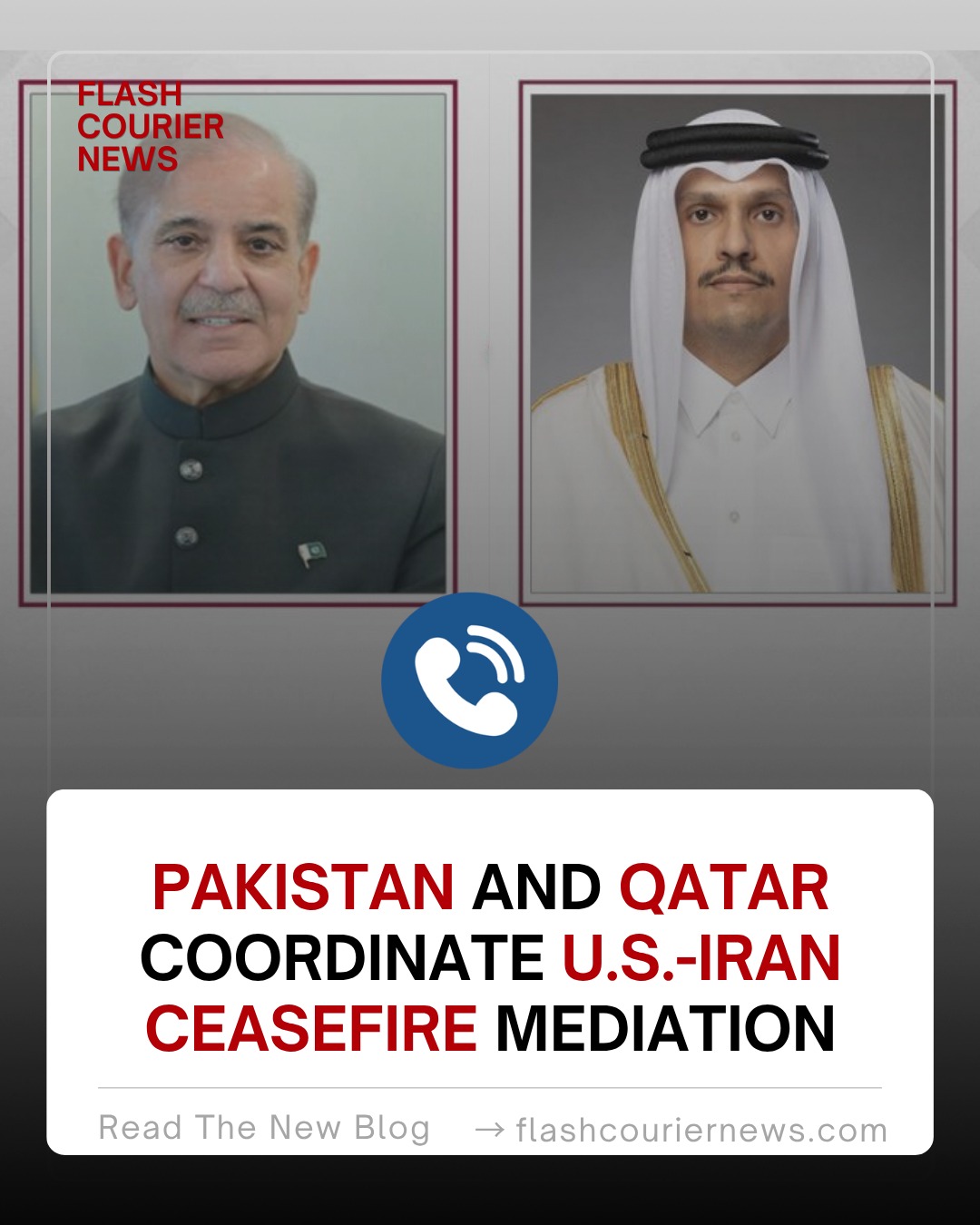
Muhammad Shehbaz Sharif, the prime minister of Pakistan, spoke with Sheikh Mohammed bin Abdulrahman bin Jassim Al Thani, the prime minister and minister of foreign affairs of Qatar, by phone on Sunday, marking an important diplomatic development.
To maintain the precarious ceasefire between the United States and Iran, the high-level call concentrated on raising regional tensions and bolstering cooperative mediation efforts.
A Truce Under Pressure
The conflict broke out in late February 2026, and the US-Iran ceasefire was first negotiated on April 8. Although the truce is still in existence in theory, recent events, including drone strikes and naval activities, have put it in jeopardy.
Both presidents complimented one another’s contributions to the ongoing de-escalation efforts during the conversation. Pakistan has made use of its longstanding connections to both Washington and the Islamic Republic, while Qatar has long been an important diplomatic link to Tehran.
Stalled Nuclear and Maritime Talks
The outreach coincides with the stalling of more extensive talks about Iran’s nuclear program and Gulf maritime access. There are concerns of a return to open conflict because neither side has demonstrated flexibility on important issues.
Sheikh Mohammed and Prime Minister Shehbaz Sharif promised to work closely together going ahead, stressing that Gulf stability is still a shared strategic goal, according to official readouts.
Qatar’s Full Support for Pakistani Mediation
Sheikh Mohammed conveyed Qatar’s gratitude for Pakistan’s efforts and all those involved in the mediation that helped bring about the truce during the call.
He reaffirmed Qatar’s unwavering support for Pakistan’s efforts to peacefully resolve the conflict.
The Fragile Ceasefire: A Timeline of Tensions
Following weeks of fierce fighting, the truce was originally mediated by Pakistan on April 8.
Key Events:
| Date | Event |
| February 28, 2026 | US and Israel launch strikes on Iran; conflict erupts |
| April 8, 2026 | Ceasefire brokered through Pakistani mediation |
| April 11, 2026 | Pakistan hosts US-Iran talks in Islamabad (no agreement reached) |
| April 27, 2026, | April 13, 2026 |
| April 13, 2026, The | US enforces a naval blockade targeting Iranian maritime traffic |
| May 7-8, 2026 | Iran launches missile/drone strikes on US destroyers near Hormuz |
| May 17, 2026 | Pakistan-Qatar leaders discuss mediation support |
Why Gulf Support Matters for the Ceasefire
A wider Gulf consensus on the need for stability is reflected in Qatar’s outreach.
- Economic Harm:
Due to shipping and energy export disruptions, the war has negatively impacted the economies of all GCC nations.
- Shared Security Concerns:
No GCC nation, including Oman, which was actively mediating to prevent the war, has been immune to Iranian strikes since the start of the conflict.
- Reassessment of US Dependability:
Discussions in several Arab Gulf capitals over the US’s reliability in bolstering their security have been a significant consequence of the conflict.
- Belief in Iranian Regime Survival:
Most GCC states are now aware that “the Iranian regime has survived the war and that it will not collapse, at least not any time soon,” according to sources.










Leave a Reply