
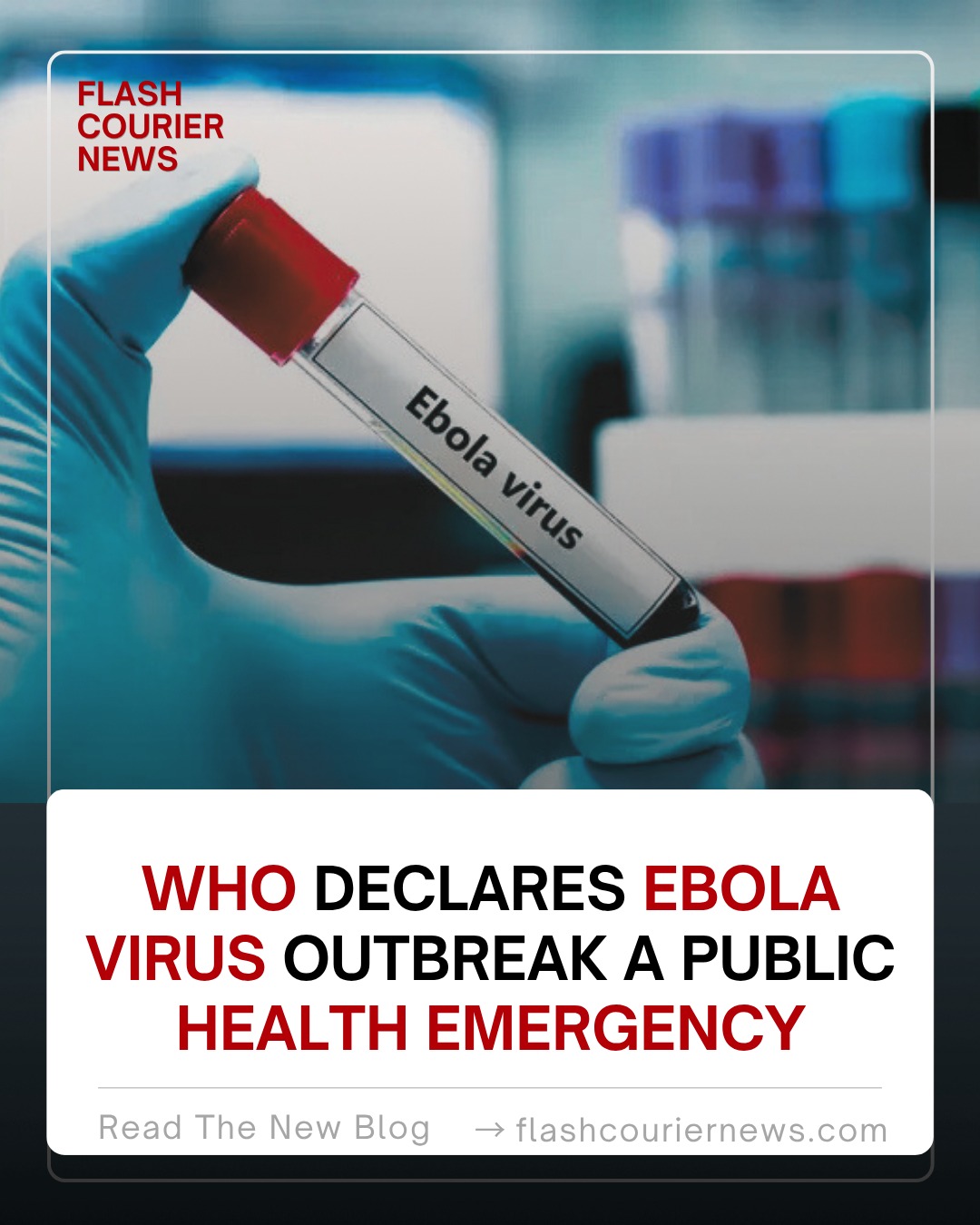
The Bundibugyo virus has no approved vaccine or targeted therapy, which has alarmed people worldwide.
The World Health Organization (WHO) issued a Public Health Emergency of International Concern (PHEIC), the highest level of global health alert, on May 16, 2026, in response to the Ebola outbreak in the Democratic Republic of the Congo (DRC) and Uganda.
The uncommon Bundibugyo virus strain has caused an outbreak that has already killed at least 80 people. Health authorities have also identified over 300 probable cases in both countries. Bundibugyo virus disease (BVD) does not presently have a licensed vaccination or specialized antiviral treatment, in contrast to the more prevalent Zaire strain.
Since 1976, the DRC has experienced 17 Ebola outbreaks. This is the second outbreak featuring the Bundibugyo strain, which was last seen in the area in 2012.
Quick Facts
Key Detail Information
Declaration Date May 16, 2026
Alert Level PHEIC (WHO’s highest global health alert)
Virus Strain Bundibugyo virus (Orthoebolavirus bundibugyoense) Affected Countries Democratic Republic of Congo (DRC) & Uganda
First Alert Date May 5, 2026 (unknown illness in Mongbwalu) Confirmed Cases (DRC) 8 laboratory-confirmed
Suspected Cases (DRC) 246 suspected
Suspected Deaths (DRC) 80 suspected deaths
Confirmed Cases (Uganda) 2 imported cases (1 death)
Previous BVD Outbreaks 2007 (Uganda) & 2012 (DRC)
Historical CFR Range 30% – 50%
Vaccine Availability None licensed for BVD
Specific Treatment None available
A Rare Strain Emerges in Eastern DRC
In the eastern Democratic Republic of the Congo’s Ituri Province, which was already dealing with armed conflict, displacement, and humanitarian issues, the outbreak started in late April 2026.
The Bundibugyo Virus: A Rare and Dangerous Strain
One of the four Ebola virus species known to infect people is the Bundibugyo virus (BDBV). Bundibugyo poses different difficulties than the more widespread Zaire ebolavirus, for which there are licensed vaccines.
Cross-Border Spread: Why Uganda Matters
The Uganda Ministry of Health confirmed the first imported case of BVD on May 15, 2026. An elderly Congolese man came from the Democratic Republic of the Congo to Kampala, a private hospital admitted him on May 11 with severe symptoms, and he passed away on May 14.
A second imported case—a person returning from the Democratic Republic of the Congo with no obvious connection to the first case—was verified in Kampala the very next day.
Why WHO Declared a Public Health Emergency (PHEIC)
The WHO’s highest degree of worldwide health alert, officially issued in accordance with the International Health Regulations, is a Public Health Emergency of International Concern. This decision was made by the WHO Director-General after consulting the States Parties involved in the incident.
The Three Criteria for PHEIC Declaration:
| Criterion | How This Outbreak Meets It |
| Extraordinary event | 8 confirmed + 246 suspected cases; healthcare worker deaths; no vaccine/treatment available |
| Public health risk to other states | Two unrelated imported cases in Uganda within 24 hours; regional travel hub at risk |
| International coordination required | Complex hu manitarian setting; insecurity; cross-border surveillance needed |










Leave a Reply