
Climate Change and Environmental Issues: The threat posed by climate change has diminished. It is currently taking place everywhere in the world. From heatwaves in Europe to floods in Pakistan and wildfires in Canada, the signs are everywhere.
This thorough manual clarifies:
- What causes climate change
- How it affects weather, wildlife, and human lives
- Which countries and communities are most vulnerable
- What solutions exist at global, national, and individual levels
- Simple actions you can take today
What Is Climate Change? A Simple Explanation
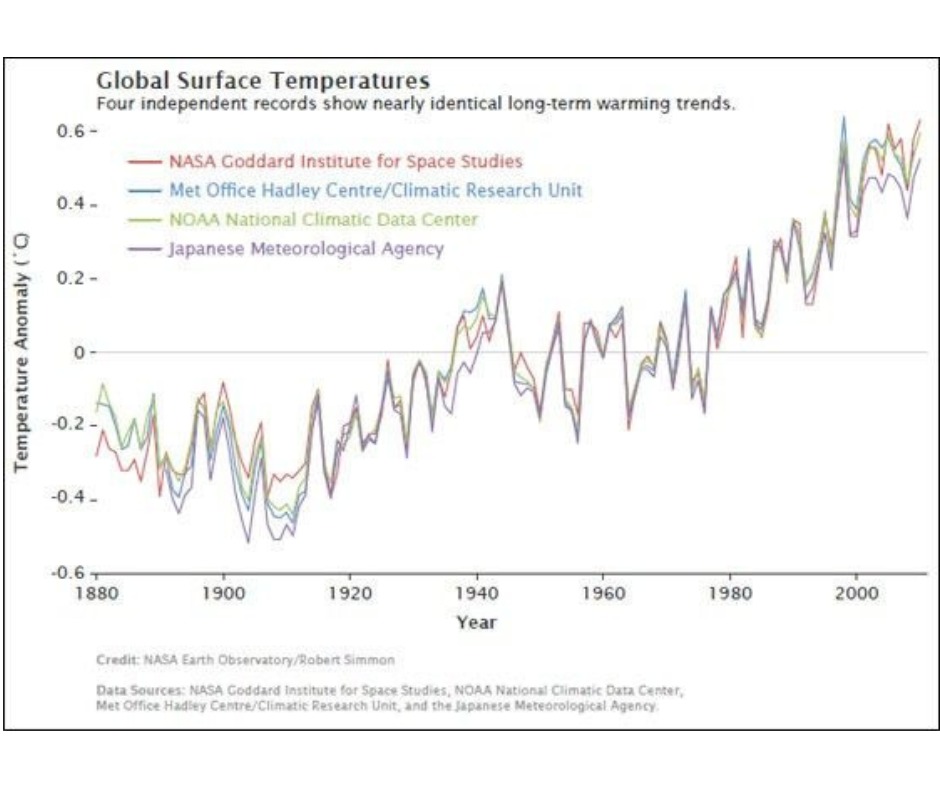
Climate change refers to long-term shifts in temperature and weather patterns. Volcanic eruptions, variations in solar radiation, and orbital shifts have all naturally altered Earth’s climate over millions of years, but since the Industrial Revolution (around 1750), human activity has been the primary cause of the current warming trend.
The Greenhouse Effect (Natural vs. Enhanced)
| Type | Description |
| Natural greenhouse effect | Gases like CO₂ and water vapor trap some heat, keeping Earth at ~15°C (59°F) — warm enough for life. |
| Enhanced (human-caused) effect | Burning fossil fuels adds extra CO₂, methane, and nitrous oxide, trapping more heat and raising temperatures. |
The Main Greenhouse Gases
| Greenhouse Gas | Main Human Sources | % of Warming |
| Carbon dioxide (CO₂) | Coal, oil, gas burning; deforestation; cement production | ~76% |
| Methane (CH₄) | Fertilizers, industrial processes, and burning crop residues | ~16% |
| Nitrous oxide (N₂O) | Fertilizers, industrial processes, burning crop residues | ~6% |
| Fluorinated gases | Refrigerants, aerosols, solvents | ~2% |
Ice core data shows that atmospheric CO2 has increased from 280 ppm (pre-industrial) to over 420 ppm today, the highest level in 800,000 years.
Visible Effects of Climate Change (With Country Examples)
Extreme Weather Events Worldwide
The “amplifier” of natural weather patterns is climate change. It produces:
- Wet seasons wetter
- Dry seasons drier
- Storms stronger
- Heatwaves are hotter and longer
| Event | Recent Example | Deaths/Cost |
| Heatwave | Europe (2023): 47°C in Sicily, Italy | ~60,000 deaths |
| Floods | Pakistan (2022): 1/3 of the country is underwater | 1,700+ deaths, $30B damage |
| Wildfires | Canada (2023): 18 million hectares burned | 200+ deaths, billions in smoke-related health costs |
| Drought | Horn of Africa (2020-2023): 5 failed rainy seasons | 40+ million facing hunger |
| Cyclone | Cyclone Freddy (2023): Southeast Africa | 1,400+ deaths, longest-lived tropical cyclone on record |
| Floods | Germany/Belgium (2021): Record rainfall | 220 deaths, $40B damage |
| Wildfires | Australia (2019-2020): “Black Summer” | 33 deaths, 3 billion animals killed/displaced |
Rising Sea Levels
| Measurement | Value |
| Current rate | ~3.7 mm per year (accelerating) |
| Total rise since 1880 | ~21-24 cm (8-9 inches) |
| Projected rise by 2100 | 0.5 to 1.5 meters (1.5 to 5 feet), depending on emissions |
Causes:
- About half of the current rise is due to thermal expansion, which occurs when warmer water takes up more space.
- Melting glaciers and ice sheets account for ~50%.
Cities at risk by 2050:
- Miami, USA
- Shanghai, China
- Mumbai, India
- Jakarta, Indonesia (already moving capital)
- Venice, Italy
- Bangkok, Thailand
- New York City, USA
Fact:
150 million people live on land that could be below the high-tide line by 2050 if emissions continue unchecked.
Melting Ice: The Arctic, Greenland, and the Himalayas
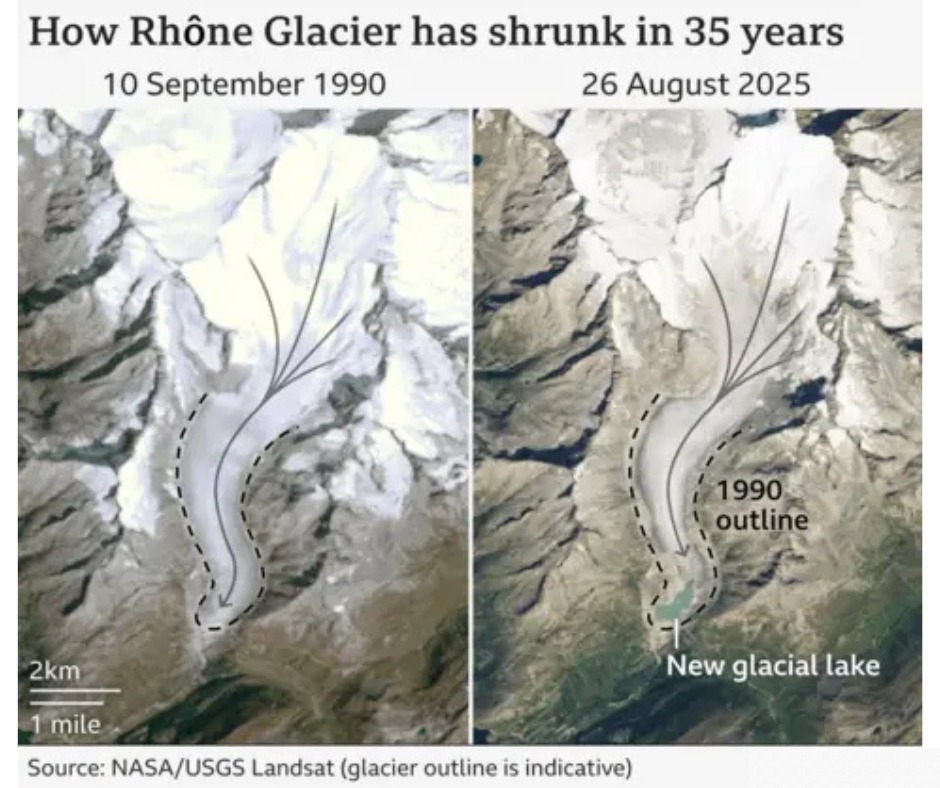
| Region | Observed Change | Consequence |
| Arctic sea ice | Declining 12-13% per decade | Polar bear habitat loss, faster regional warming |
| Greenland ice sheet | Losing 270 billion tons/year | 0.7 mm sea level rise per year (from Greenland alone) |
| Antarctica | Losing 150 billion tons/year | West Antarctic ice sheet potentially unstable |
| Himalayan glaciers | Melting 65% faster since 2010 | Threatens water supply for 1.5 billion people |
Impact on Wildlife and Ecosystems
The threat to global biodiversity that is expanding the fastest is climate change. The IPCC estimates that one million species are currently in danger of going extinct, many of them as a result of climate-related factors.
| Ecosystem | Specific Threat | Data |
| Coral reefs | Bleaching (warm water expels symbiotic algae) | Drought + fireThe |
| Polar regions | Sea ice loss | Polar bears may be extinct in the wild by 2100 |
| Forests (boreal) | Bark beetle infestation | Killed 100,000 sq km of forest in western North America |
| Forests (Amazon) | Drought + fire | 2023 drought reduced river levels to record lows |
| Oceans | Acidification (CO₂ absorbed = more acidic) | Shellfish (oysters, clams, corals) struggle to build shells |
| Wetlands | Sea level rise + drought | 50% of world’s wetlands lost since 1900 |
Animals Already Affected
- Adélie penguins: In certain Antarctic colonies, populations fell by 60%.
- Sea turtles: More than 90% of hatchlings are female due to warmer sand temperatures, which skews sex ratios.
- Monarch butterflies: In 20 years, the size of winter colonies decreased by 80%.
- Mountain goats: Food intake and survival are decreased by heat stress.
Bees emerge at different times than flowers bloom, interfering with food sources as flowering times change.
Human Impact: Health, Food, and Displacement
Health Effects
| Health Problem | Cause |
| Heat stroke/death | Extreme heatwaves |
| Respiratory illness | Wildfire smoke, increased ground-level ozone |
| Infectious disease spread | Mosquitoes (malaria, dengue) expand range northward |
| Mental health | Climate anxiety, trauma from disasters |
| Malnutrition | Crop failures reduce food availability |
Food Safety
- Wheat: Global wheat yields are reduced by 6% for every degree Celsius of warming.
- Rice: Warmer nights reduce grain filling (yield drop 10% per 1°C night warming)
- Maize (corn): By 2050, yields in tropical regions may drop by 20–40%.
- Coffee: 50% of current coffee-growing land could be unsuitable by 2050
Climate Displacement
- Current: ~20 million people displaced annually by weather-related disasters
- Projected by 2050: 150-300 million climate refugees (World Bank estimate)
Global Responses: What Is Being Done?
Major International Agreements
| Agreement Year Key Goal Signatories |
| Kyoto Protocol 1997 Binding emissions cuts for developed nations 192 parties |
| Paris Agreement 2015 Limit warming to 1.5°C-2°C above pre-industrial 195 parties |
| Kunming-Montreal Pact 2022 Protect 30% of land and oceans by 2030 188 parties |
Renewable Energy Growth (2010-2025)
| Energy Source Growth 2025 Share of Global Electricity |
| Solar ↑ 1,800% ~6% |
| Wind ↑ 500% ~8% |
| Hydropower ↑ 30% ~15% |
| Batteries (storage) ↑ 3,000% N/A |
Currently, about 30% of the world’s electricity comes from renewable sources. China, the US, and the EU are seeing a decrease in coal production, while Southeast Asia and India are seeing an increase.
Countries Making Most Progress
| Country | Key Achievement |
| Costa Rica | 98% renewable electricity for 8+ consecutive years |
| Denmark | 50% of electricity from wind |
| Norway | 98% of electricity from hydropower |
| Uruguay | 90% renewable in under 10 years |
| China | 50% of world’s solar + wind + EVs |
Debunking Common Climate Myths (For Skeptical Readers)
| Myth | Fact |
| “It’s too late to do anything.” | True, but current warming is 100x faster than natural shifts. Past changes took thousands of years; this took decades. |
| “Climate has always changed naturally.” | Weather ≠ climate. Global warming disrupts weather patterns, making extreme snow and cold more likely in some areas. |
| “It’s snowing outside — so much for warming.” | “Scientists disagree on climate change.” |
| “Plants need CO₂ — more is better” | CO₂ does fertilize plants, but heat, drought, and pests offset gains. Crop nutritional quality also declines. |
| “It’s too late to do anything” | False. Every 0.1°C of warming avoided saves lives, crops, and ecosystems. |
What You Can Do Today (Detailed Actionable Advice)
You don’t need to be perfect. Small changes by millions of people add up.
At Home (Energy)
| Action | CO₂ Saved per Year |
| Switch to LED bulbs (all lights) | 500 kg |
| Unplug “vampire” devices (TV, chargers, computers) | 200 kg |
| Lower the water heater to 50°C (120°F) | 300 kg |
| Install a smart thermostat | 500 kg |
| Seal drafty windows and doors | 400 kg |
| Lower water heater to 50°C (120°F) | 200 kg |
Transportation
| Action | CO₂ Saved per Year |
| Bike/walk for trips under 3 km | 300+ kg |
| Carpool to work (2-3 people) | 500 kg per person |
| Use public transit instead of driving | 2,000+ kg |
| Switch to electric or hybrid car | 2,500+ kg |
| Reduce flying (skip 1 short-haul flight) | 500-1,000 kg |
Food Choices
| Action | CO₂ Saved per Year |
| Eat plant-based 2 days/week | 300 kg |
| Reduce food waste (plan meals, freeze leftovers) | 400 kg |
| Buy local seasonal produce | 100-200 kg |
| Compost food scraps | 100 kg |
Financial and Advocacy
| Action | Impact |
| Move savings to a fossil-fuel-free bank/investment fund | Redirects capital away from fossil fuels |
| Vote in every election (local to national) | Influences policy |
| Talk to 3 friends/family about 1 climate action | Multiplies impact |
| Support or donate to environmental organizations | Funds research, advocacy, litigation |
Why Hope Is Not Lost
The situation is serious, but not hopeless.
| Reason for Hope | Evidence |
| Cost of renewables | Solar and wind are now the cheapest electricity in history |
| EV adoption | 1 in 5 new cars sold globally in 2025 was electric |
| Policy momentum | 140+ countries have net-zero pledges |
| Youth activism | Batteries, green hydrogen, and nuclear (SMRs) are improving fast |
| Technology | Batteries, green hydrogen, nuclear (SMRs) improving fast |
Ecosystems, economies, and lives are saved for every degree of warming that is prevented. What we do now will determine the future, which has not yet been written.







Leave a Reply