
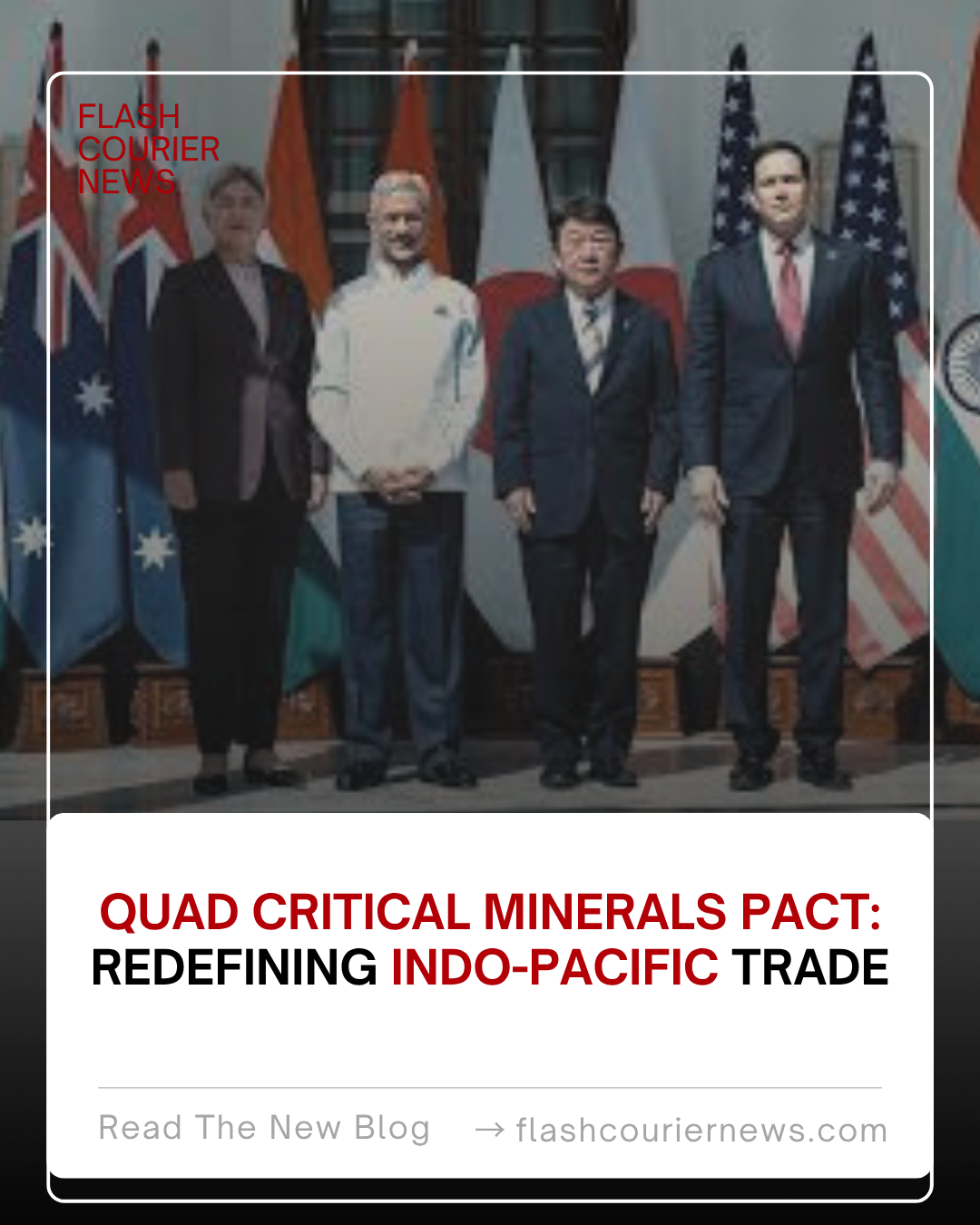
A New Maritime Order’s Beginning
The Quadrilateral Security Dialogue recently announced a massive infrastructure plan to transform global supply networks. Leaders from Australia, India, Japan, and the United States reached a historic agreement to build a maritime port. In order to combat powerful regional monopolies, this geopolitical union concurrently established a comprehensive Quad Critical Minerals Pact.
This dual-track approach addresses the serious weaknesses in contemporary industrial manufacturing sectors. The four countries understand that an excessive reliance on one economic giant threatens their long-term sovereign security. As a result, this concerted effort creates a robust, autonomous framework for extraction, processing, and distribution.
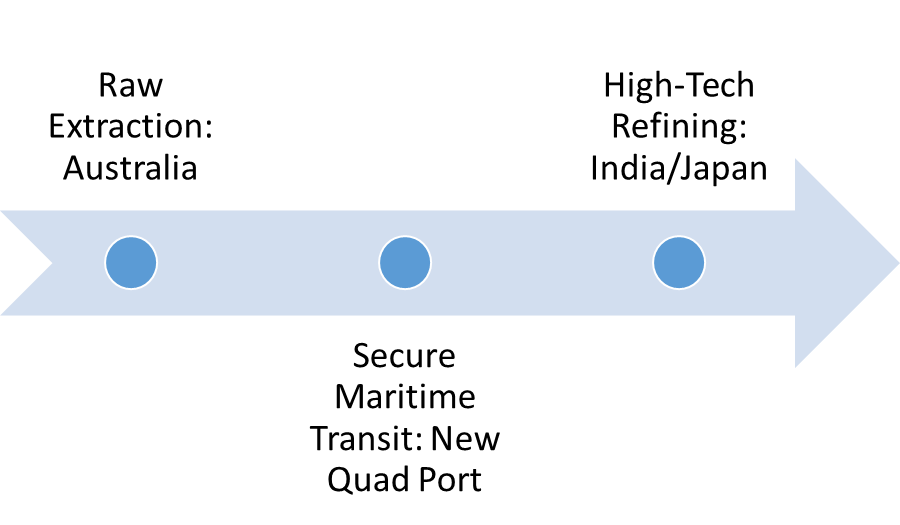
As part of the mammoth project, the alliance will strategically place a major shipping hub within the vital seas of the Indo-Pacific region. Through maritime trade routes, this hub will immediately connect resource-rich countries with advanced processing facilities. As a result, the recently formed Quad Critical Minerals Agreement will alter how the world obtains essential technology components.
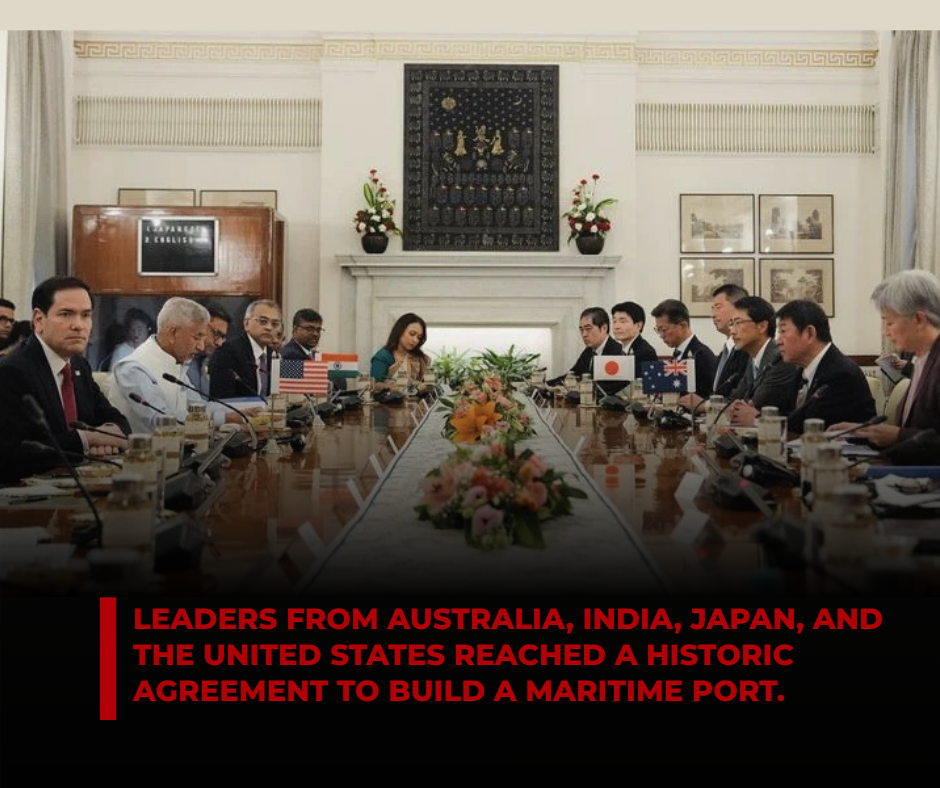
Inside the Mega-Port Project’s Blueprint
The quick engineering of a cutting-edge deep water commercial port is the physical cornerstone of this partnership. To build this next-generation logistics infrastructure, member nations chose a very vital maritime chokepoint. According to analysts, this site immediately intercepts the main shipping lines that connect East Asia to European markets.
| QUAD ALLIANCE REGIONAL ROLES | ||
| COUNTRY | PRIMARY RESOURCE | CORE OPERATIONAL ROLE |
| Australia India Japan United States | Raw Ore Extraction Industrial Labor Advanced Tech Capital Investment | Main Mineral Exporter Logistics & Port Operations Precision Refining Systems Project Security & Oversight |
| Source: Indo-Pacific Maritime Security Infrastructure Report (2026) | ||
The alliance will provide more than $15 billion in total sovereign funding to the first stage. To speed up the challenging underwater excavation procedures, Japan will supply sophisticated automated dredging equipment. In the meantime, Indian engineering firms will run railway integration networks and land-side cargo distribution systems.
This port will have special terminals built to safely manage large-scale bulk mineral shipments. Sophisticated tracking software will track every metric ton of cargo from the time of arrival until the final departure. Thanks to this protected infrastructure, hostile regional players cannot readily disrupt the flow of necessary production materials.
The Quad Critical Minerals Pact: Breaking the Monopoly
In the current technological competition, obtaining raw resources is only half the problem. The complete Quad critical minerals accord focuses intensely on the complicated refining procedures of rare earth elements. Currently, a single dominant state controls more than 70% of the world’s lithium and cobalt processing capacity.
During intensified political conflicts, this risky concentration enables hostile governments to use trade restrictions as a weapon. To break this hold, the new deal directly pays independent processing facilities in Australia and India. To adhere to stringent international environmental standards, these new facilities will use environmentally friendly refining techniques.
The agreement also eliminates restrictive tariffs on the transfer of minerals between the four participating partner countries. This policy stimulates private corporation investment by creating an extremely profitable internal market. Manufacturers of electric vehicles, aerospace, and military will have direct access to a fully insulated supply chain.
Realities of Maritime Security and Geopolitical Conflict
There will undoubtedly be fierce opposition from local rivals to the implementation of this enormous infrastructure project. Within its established area of influence, Beijing sees this concerted maritime development as a clear Western containment tactic. According to naval analysts, the alliance expects grey-zone military operations close to the new port location to immediately escalate.
- Subsea Drone Deployment: To keep an eye on the undersea construction stages, rivals will probably use surveillance drones.
- Cyber Interruption Attempts: The port’s digital logistics networks will be the focus of state-sponsored hacker collectives.
- Targeted Trade Embargoes: In order to postpone the building schedule, non-member governments may impose restrictions on secondary supplies.
- Naval Patrol Escalations: Hostile forces will likely conduct frequent, forceful military actions along nearby international maritime lanes.
The partnership nonetheless completely dedicates itself to protecting its shared investments in spite of these impending external threats. In the vicinity of the construction zone, the US Navy plans to regularly carry out freedom of navigation operations. Thanks to this protective cover, commercial vessels can reach the site without hostile players illegally intimidating them.
Editor’s Perspective: An Economic Warfare Masterwork
The implementation of this infrastructure project represents a significant change in how contemporary economic warfare is carried out. Western commentators maintained for years that the Quad lacked the strength to impose genuine regional stability. This tangible infrastructure project demonstrates that economic integration is a far more effective tool than military posturing.
| STRATEGIC INDUSTRIAL EVOLUTION | |
| PREVIOUS VULNERABILITY | NEW SECURED REALITY |
| Single-source mineral monopolies. | Diversified refining networks protected by international law. |
| Vulnerable commercial sea lanes. | Hardened sovereign port hubs backed by joint naval defense. |
We have to realize that this port is more than just a commercial port for cargo ships. In my opinion, this endeavor is an aggressive economic stronghold intended to permanently negate the coercion of foreign supply chains. The participating nations are smartly shifting from reactive diplomatic protests to proactive, physical supply chain ownership.
This development, in my opinion, will lead to a significant global migration of tech manufacturing away from authoritarian centers. Businesses will inevitably relocate to areas that provide consistent, guaranteed access to processed rare earth elements. International companies are now compelled to take sides because the Quad has effectively placed a line in the ocean.
The political tenacity of its member countries will be crucial to this alliance’s future viability. The initiative might come to a disastrous halt if these countries’ foreign policy change as a result of impending home elections. Nonetheless, the current trend points to an unchangeable consensus that complete supply chain independence is necessary for economic security.
Financing the New Era of Global Supply Chains
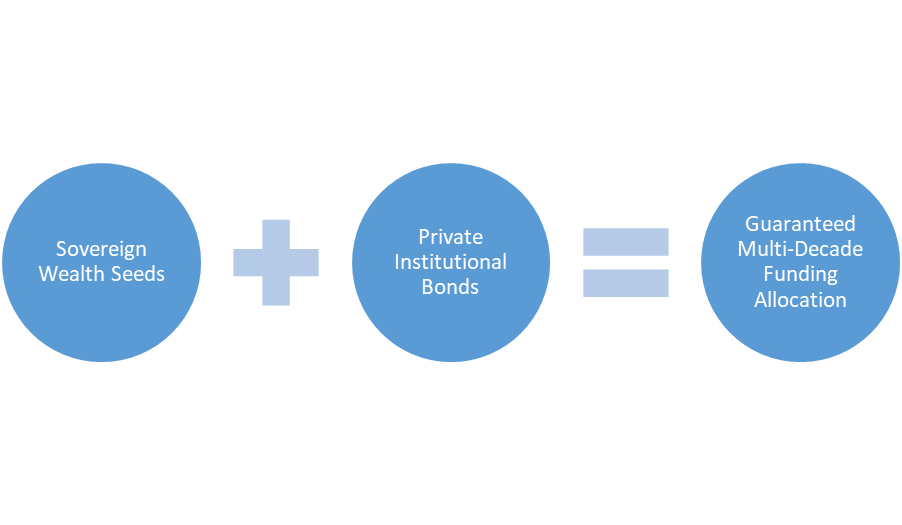
This nautical project’s enormous financial scope necessitates a creative combination of public and private funding. Low-interest loans from American and Japanese sovereign wealth institutions will cover the early construction risks. This state-backed promise encourages major international banks to give developers long-term commercial credit lines.
In order to draw in institutional pension funds from throughout the world, the alliance will also introduce a special Indo-Pacific Infrastructure Bond. With the combined economic might of four enormous countries, this financial instrument provides steady, long-term returns. These many funding sources guarantee that the project stays out of the hazardous debt traps that are typical of competing infrastructure initiatives.
Exclusive operating rights in the future commercial trade zones are already being fiercely contested by private logistics companies. A very robust business model is produced by combining state-backed security with the efficiency of the private sector. The port will become self-sustaining within five years of completion thanks to this financial synergy.
Future Projections: The Mineral Superhighway
A permanent industrial superhighway across the ocean will be established if the Quad Critical Minerals Pact is implemented successfully. Millions of tons of processed commodities will be handled by this network every year by 2030. The production costs of consumer electronics and next-generation defense technology will be significantly lower as a result of this change.
- Boost Automated Extraction: Install AI-powered mining equipment throughout Western Australia to increase productivity.
- Implement quantum-encrypted communication arrays over all regional port networks to strengthen cyber defenses.
- Extend Member Network: Invite countries with abundant natural resources, such as Vietnam and Indonesia, to become part of the mineral framework.
- Standardize Refining Metrics: Establish consistent quality and environmental certifications for all associated processing facilities.
In the end, physical infrastructure shapes historical realities that endure beyond transient political regimes. For future generations, the Indo-Pacific will remain free, open, and economically diverse thanks to this port project. By constructing a tangible anchor for international democratic stability, the Quad has transcended meaningless rhetoric.










Leave a Reply