
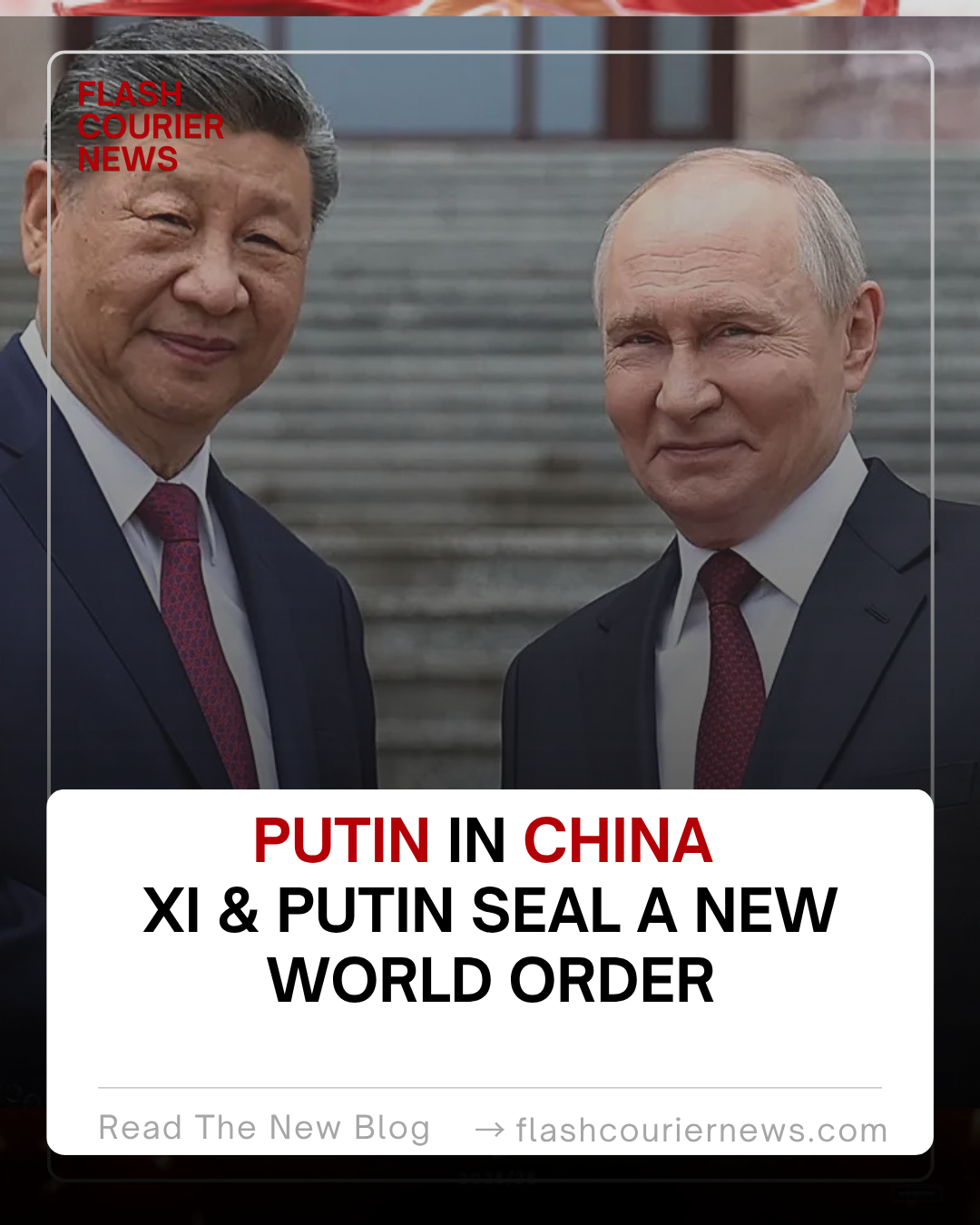
This week, Putin’s visit to China has rocked the international diplomatic scene. Only a few days after US President Donald Trump wrapped up his own trip to China, Russian President Vladimir Putin arrived in Beijing for a state visit. Putin’s visit to China sends a strong message: regardless of what Washington does, Russia and China will remain united.
Putin referred to his close relationship with Chinese leader Xi Jinping as partners in international affairs and trade. On Wednesday, May 20, 2026, Xi welcomed Putin with a formal ceremony at the Great Hall of the People. The world watched as two of its most influential leaders confidently and purposefully shook hands.
Xi Hosts Trump and Putin in the Same Week
This week, Beijing accomplished a remarkable diplomatic double. Within a week, Xi welcomed two world leaders embroiled in seemingly unsolvable disputes. The announcement of Putin’s visit came just one day after Trump left China. According to the Kremlin, Putin and Xi will talk about important regional and global issues as well as economic cooperation. Beijing is thought to have a lot of power, and Moscow wants assurance that China hasn’t moved closer to Washington. China demonstrated its increasing influence on the international scene during the consecutive summits.
Energy, Oil & the Big Gas Deal
The core of this summit is energy. Last week, Putin hinted that a “serious” oil and gas deal between China and Russia is imminent. According to Putin, Russian-Chinese cooperation in the energy sector is what propels economic cooperation.
In the first quarter of 2026, Russia’s oil exports to China increased by 35%. At a time when Moscow was largely shut out of European markets, China has become an important buyer of Russian oil. During Putin’s most recent visit to China in September 2025, Xi and Putin also talked about the much-anticipated Power of Siberia 2 gas pipeline.
The Friendship Treaty Gets Extended
The 25th anniversary of the 2001 Treaty of Good-Neighbourliness and Friendly Cooperation falls on the same day as Putin’s visit. Chinese state media confirmed the agreement between the two parties to extend this friendship treaty. The extension makes it very evident that this alliance won’t deteriorate anytime soon.
In a video speech prior to the visit, Putin referred to Russia-China relations as being at a “truly unprecedented level”. Because of their close and intimate relationship, both leaders frequently address one another as “dear” or “old” friends.
What This Summit Means for the World
The visit strengthens bilateral ties in business, economics, and military technology exchange, but analysts say no significant breakthroughs are anticipated. Moscow and Beijing both aim to realise their vision of a world free from American dominance.
Putin is facing an unsolvable conflict in Ukraine that he appears to be losing, so this visit is vital. Growth projections for Russia’s economy have been cut to just 0.4% this year as a result of Ukrainian attacks on oil infrastructure. Currently, China continues to be his most vital lifeline.
Over 40 Agreements Signed Between Moscow and Beijing
Over 40 cooperation agreements in fields like trade, technology, and media exchanges were signed under Putin and Xi’s supervision. These agreements cover many important areas for both countries. The sheer number of agreements reached demonstrates how committed both parties are to strengthening their relationship. This is a long-term strategic commitment, not merely diplomacy.
According to Chinese state media, the two nations signed cooperation agreements covering everything from trade to nuclear energy and the construction of a new cross-border railway. Trade volumes would increase significantly with the construction of a new railway between the two nations. A greater degree of strategic trust between Beijing and Moscow is indicated by nuclear energy cooperation. These actions have actual economic significance and are not merely symbolic.
The Power of Siberia 2 Pipeline Remains Unresolved
Putin’s departure from Beijing without the energy pipeline breakthrough Moscow had been hoping for signalled the changing nature of a partnership that is moving more and more in Beijing’s favour. For years, Russia has been actively promoting the Power of Siberia 2 pipeline. A large portion of the gas income that Russia lost after severing ties with Europe would have been replaced by the pipeline. For Moscow, its exclusion from the signed agreements is a significant setback.
Beijing and Moscow had reached a consensus on the venture’s main parameters, according to Russian Press Secretary Dmitry Peskov, but some details were still up for debate. To put it diplomatically, this indicates that the deal is still pending. China doesn’t seem to be in a rush to agree on terms that might not be entirely advantageous to it. This indicates that Beijing currently has the upper hand in the relationship.
China’s Global Influence Reaches a New Peak
Following the signing ceremony, Xi declared that the two nations’ relations had reached “the highest level in history.” That is a daring declaration from a leader who is not prone to hyperbole. It illustrates how quickly the relationship between China and Russia has developed since the start of the conflict in Ukraine. In real time, the world is witnessing the emergence of a new geopolitical axis.
Over the years, Putin and Xi have met more than 40 times, and these frequent gatherings are frequently used as a platform to highlight their strong cultural and diplomatic ties. Few global leaders continue to be as personally involved. There is much more to their relationship than just standard diplomacy. It is a long-term, purposeful collaboration that has been developed over many years.
What Comes Next for Russia, China, and the West
Additionally, Putin is expected to attend the Asia-Pacific Economic Cooperation summit in southern China in November. Both leaders will have a significant platform to demonstrate their unity during that appearance. The impression of an unbreakable bloc is further solidified by each shared stage. Western countries will keep a close eye on that summit.
China is currently the most sought-after diplomatic partner in the world, as evidenced by Trump and Putin’s consecutive trips to Beijing. Moscow and Washington are vying for Beijing’s favour. Xi has skilfully used this opportunity to improve China’s reputation internationally. Beijing is at the centre of the new global order that is being formed this week.
FAQs
What was the purpose of Putin’s May 2026 visit to China?
Putin travelled to China to meet with Xi Jinping and improve relations between Russia and China. Energy agreements, the conflict in Ukraine, and renewing their friendship treaty from 2001 were all discussed during the trip. Only a few days had passed since Donald Trump’s own visit to Beijing.
During the summit, did Putin and Xi sign any agreements?
Indeed. The Treaty of Good-Neighborliness and Friendly Cooperation will be extended, the two leaders decided. Additionally, they made great strides toward a major agreement for oil and gas cooperation, which included talks about the Power of Siberia 2 pipeline.
Why did Trump and Putin travel to China in the same week?
It emphasised China’s expanding influence as a global power mediator. Beijing demonstrated its ability to interact with both Washington and Moscow concurrently on its own terms by arranging meetings with two opposing world leaders in a matter of days.
What is China’s economic significance to Russia?
China is currently Russia’s largest trading partner. Early in 2026, Russian oil exports to China increased by 35%. China is Russia’s most significant economic partner, accounting for over 25% of all exports.
Does China support the US or Russia?
China maintains its neutrality. Beijing, according to analysts, controls both connections to increase its own leverage. It engages in trade with the US and maintains close economic ties with Russia, but it openly supports neither side in the conflict in Ukraine.









Leave a Reply