
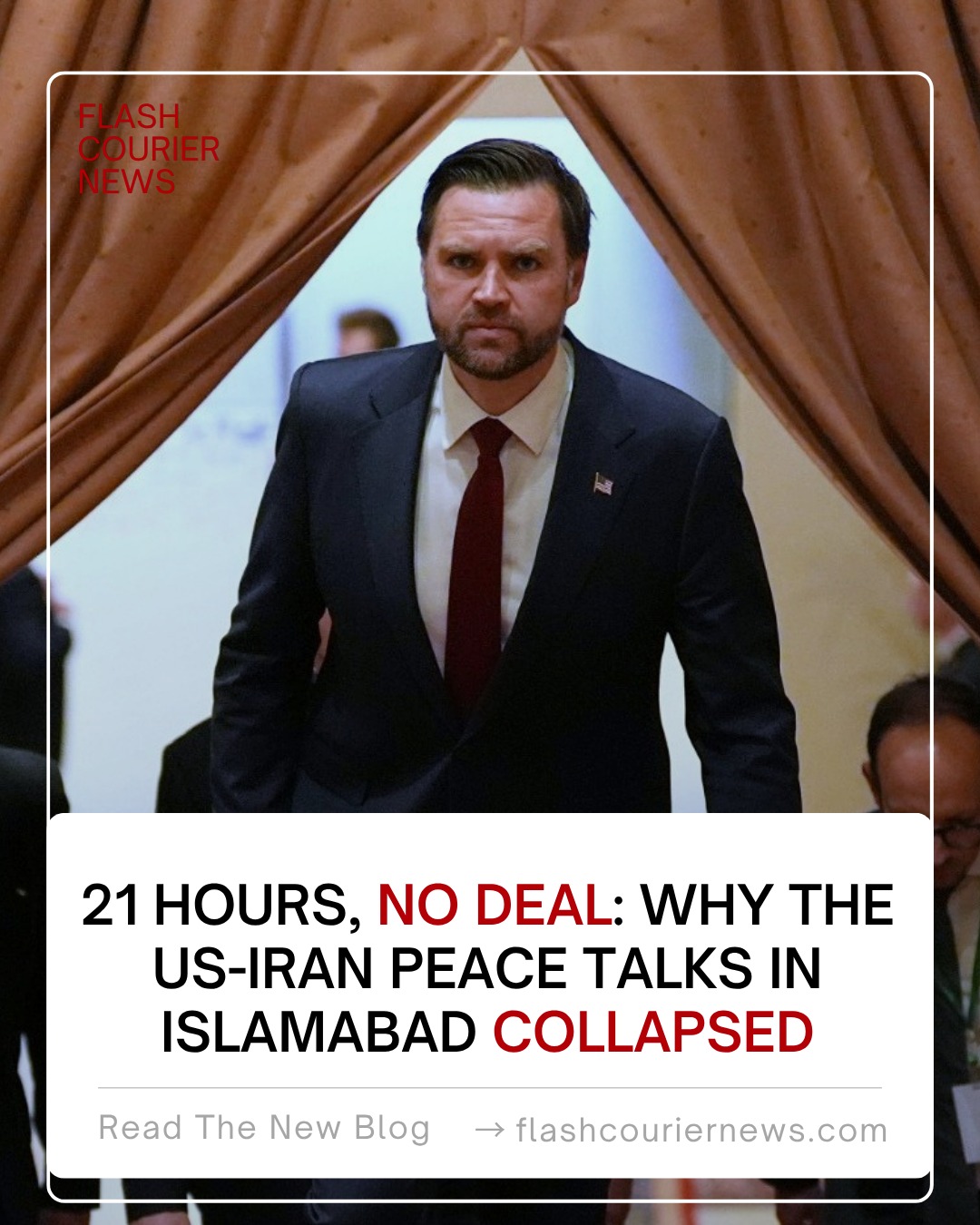
Islamabad Talks End Without Agreement. In a highly anticipated diplomatic effort, high-level delegations from the United States and Iran gathered in Islamabad for direct proximity talks aimed at transforming a fragile two-week ceasefire into a lasting peace agreement. After more than 21 hours of intense negotiations, the talks concluded on April 12, 2026, without a deal.
US Vice President JD Vance, who led the American side, announced the outcome early Sunday morning, stating that Iran had refused to accept key US terms — particularly a firm commitment to abandon any pursuit of nuclear weapons.
How Islamabad Became the Venue: Pakistan played a pivotal role as mediator, helping broker the initial ceasefire just days earlier. The talks marked one of the most direct high-level engagements between the US and Iran since the 1979 Iranian Revolution. The Iranian delegation was led by Parliament Speaker Mohammad Baqer Ghalibaf and Foreign Minister Abbas Araghchi and included around 71 members, a large team signaling serious intent across multiple sectors. The US delegation was headed by Vice President JD Vance, accompanied by special envoy Steve Witkoff, Jared Kushner, and senior CENTCOM officials.
Both sides stayed at the Serena Hotel in Islamabad and engaged through a proximity format, with Pakistani diplomats (including Prime Minister Shehbaz Sharif and Deputy Prime Minister Ishaq Dar) acting as messengers to ease direct tensions.
Massive Security and Symbolic Gestures
Islamabad Talks End Without Agreement. Islamabad was placed under tight security with nearly 10,000 personnel deployed, including elite SSG commandos. The Pakistan Air Force provided fighter escorts and employed air mobility deception techniques to protect the delegations. Notable symbolism included: Army Chief General Asim Munir receiving the Iranian delegation in uniform (seen by observers as a gesture of military solidarity) and switching to civilian attire for the US arrival. Pakistan deliberately kept its top civilian leadership (Prime Minister and President) away from airport receptions, maintaining balanced protocol since neither Donald Trump nor Iran’s Supreme Leader attended personally.
What Went Wrong: The Core Sticking Points
According to Vice President Vance, the US presented its “best and final offer,” but the two sides could not bridge critical gaps. The main reasons for failure appear to be:
Nuclear Program: The US insisted on a clear, verifiable commitment from Iran to never develop or seek nuclear weapons. Iran reportedly refused to provide such assurances, viewing them as excessive demands.
Sanctions Relief and Frozen Assets: Iran pushed for the unfreezing of billions in assets and broader sanctions relief, while the US appeared unwilling to concede without firm nuclear guarantees.
Regional Issues: Discussions also covered the Strait of Hormuz (where shipping traffic remained far below normal levels), the fragile situation in Lebanon, and restrictions on Hezbollah. Deep mistrust stemming from years of conflict made compromise difficult.
Maximalist Positions: Both sides entered with firm red lines. Iran maintained its right to enrich uranium and sought reconstruction guarantees, while the US emphasized “no nuclear weapon” as non-negotiable.
Iranian officials described the talks as “intensive” but pointed to a “gap between opinions on two or three important issues.” Tehran signaled that diplomacy remains open but rejected what it called “unlawful requests.”
Pakistan’s Role: A Diplomatic Success Despite No Deal
Even though no agreement was reached, many analysts view Pakistan’s facilitation as a win. The country successfully brought two adversaries to the table for the first time in decades under such tense conditions. Pakistan has a long history of mediation (Geneva Accords, Islamabad Accord, Doha Agreement), and this effort further highlighted its strategic importance in regional diplomacy. Observers widely noted Prime Minister Shehbaz Sharif’s low-key, professional approach, which avoided unnecessary grandstanding while keeping channels open.
What Happens Next?
- The current two-week ceasefire’s future is now uncertain.
- Vance indicated the US offer remains on the table, leaving the next move to Iran.
- Global markets and energy security concerns (especially regarding the Strait of Hormuz) will likely intensify in the coming days.
- Observers expect indirect talks or written proposals to continue, but the window for de-escalation is narrowing.
Conclusion: Deep-seated hostility, divergent red lines on the nuclear issue, and unresolved regional tensions were too much to overcome in a single long session, but the Islamabad discussions offered a unique chance for direct communication. Such high-level talks taking place at all, despite the lack of progress, highlight Pakistan’s expanding role as an impartial mediator in a volatile region. The upcoming weeks will determine whether this failure leads to a fresh escalation or serves as a springboard for more diplomatic rounds.







Leave a Reply