
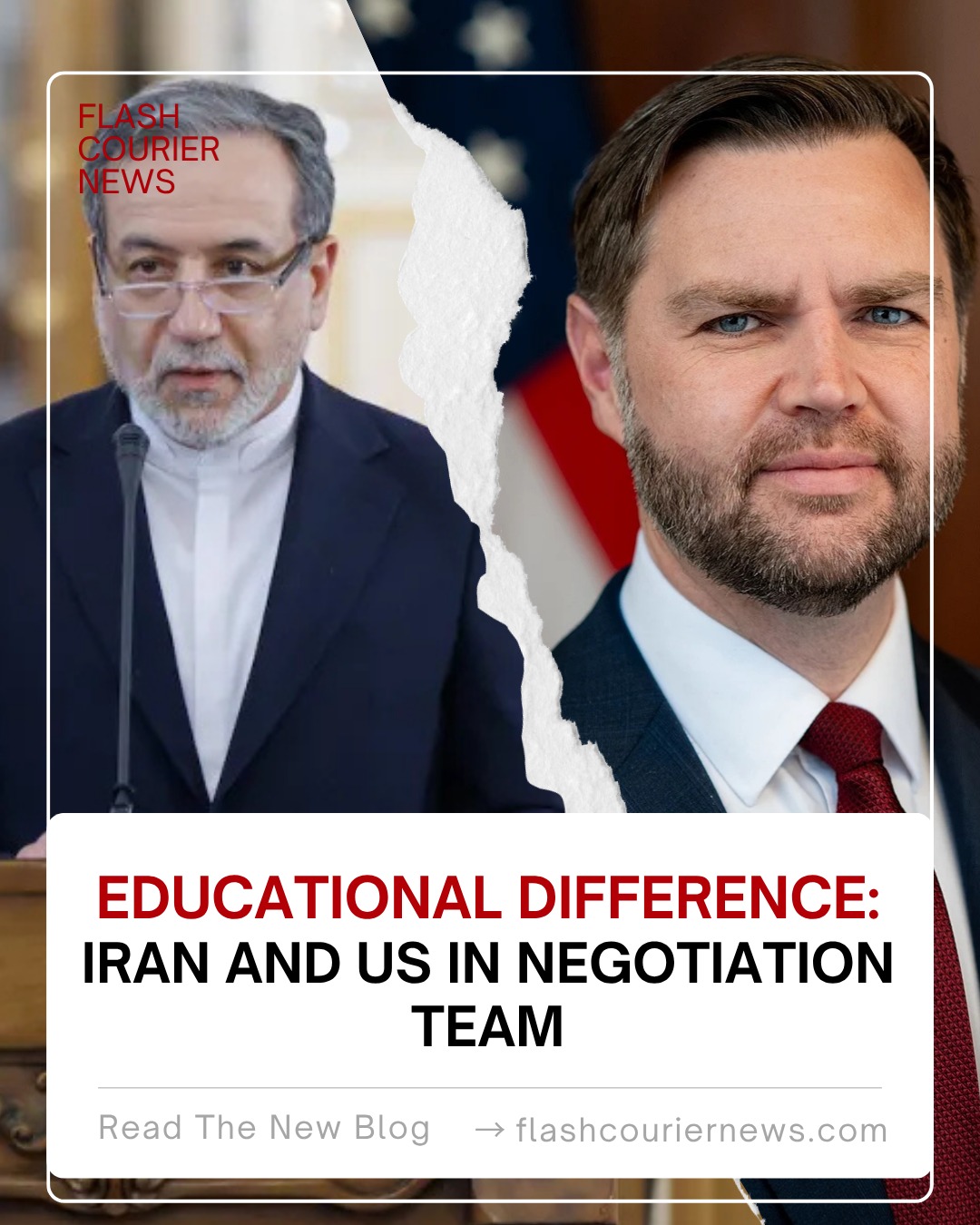
The educational differences between Iran and the United States in the Islamabad Talks make clear how different their educational systems are. These direct talks between Iran and the US, mediated by Pakistan, are one of the most delicate and significant diplomatic negotiations in recent years. Their goals are to resolve fundamental security issues (like Iran’s nuclear program), solidify a precarious ceasefire, and stop the Middle East from getting worse.
Such conversations require a thorough understanding of international law, economics, defense strategy, geopolitics, and diplomacy. A comparison of the two delegations’ characteristics reveals a striking difference: the Iranian team disproportionately consists of individuals with advanced academic credentials, usually PhDs, while the US team primarily draws from political, military, corporate, and personal networks connected to the government.
This disparity is a reflection of more general cultural and structural methods of training negotiators for complex international conflicts.
Iranian Delegation: Emphasis on Advanced Academic and Specialized Expertise
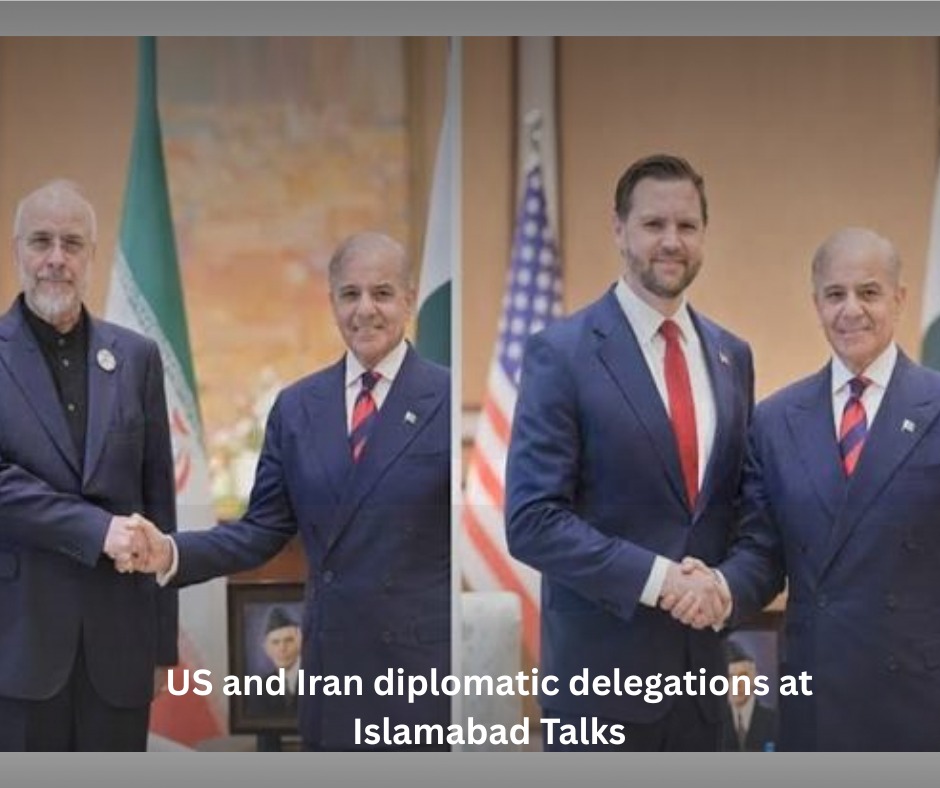
Educational Differences between Iran vs United States.
Senior officials with extensive formal education, many of whom have doctorates from prestigious Iranian colleges, are in charge of Iran’s delegation to the Islamabad Talks.
This reflects Iran’s tradition of valuing rigorous academic training in fields like international relations, engineering, economics, and law for its diplomatic and political elite.
Mohammad Bagher Ghalibaf (Parliament Speaker, head of the delegation): Holds a Ph.D. in Political Geography. A former commander in the Islamic Revolutionary Guard Corps (IRGC), he brings a blend of academic research and practical security experience.
Abbas Araghchi (Foreign Minister): Holds a Ph.D. in International Relations. A career diplomat with decades of experience in nuclear negotiations, he has deep expertise in multilateral diplomacy and strategic affairs.
Abdolnaser Hemmati (Central Bank Governor): Holds a PhD in Economics. He provides critical expertise on financial sanctions, economic recovery, and the practical impacts of international agreements.
Ali Akbar Ahmadian (Secretary of the Supreme National Defense Council): Holds a PhD (often referred to as Dr. Ahmadian). His background combines advanced studies with high-level defense and strategic planning.
Deputy foreign ministers and technical advisers are among the other members;
many of them hold advanced degrees in political science, law, or similar disciplines.
The Iranian team can approach negotiations with a thorough understanding of historical precedents,
legal frameworks, and long-term strategic ramifications thanks to this intellectual depth. This is crucial for “case-sensitive” discussions when every word might have an impact on future political goals and regional stability.
US Delegation: Blend of Political Experience, Military Background, and Practical Networks
Educational Differences between Iran and the United States:
Iran, led by prominent politicians, prioritizes close ties to the executive branch, military expertise, and practical political savvy over formal advanced academic degrees in international affairs or diplomacy.
JD Vance (Vice President, leading the delegation):
Holds a Juris Doctor (JD) from Yale Law School and a bachelor’s degree from Ohio State University. A former Marine, venture capitalist, and author, he brings legal training, political strategy, and military perspective.
Jared Kushner (Senior Adviser, President’s son-in-law):
Holds a bachelor’s degree from Harvard University and a JD from New York University School of Law. Known for his role in previous Middle East diplomatic efforts (e.g., Abraham Accords), he contributes business-oriented negotiation experience and personal trust from the administration.
Steve Witkoff (Special Envoy): A prominent real estate developer and businessman with long-standing personal ties to the president. His background is primarily in commercial negotiations and deal-making rather than traditional academic diplomacy.
Supporting members include military figures such as Admiral Brad Cooper (CENTCOM-related expertise), adding operational and security depth.
These variations show how different countries train their diplomats. Whereas the US model prioritizes flexibility and executive-level trust, Iran’s model places more emphasis on academic rigor and institutional knowledge. Both strategies have advantages:
one is superior in terms of continuity and depth, while the other is superior in terms of political will and agility.
Key Educational and Stylistic Differences
Academic Depth vs. Practical Application: Iranian negotiators are well-equipped to make complex, historically informed arguments because many of them have PhDs and have pursued specialized academic studies.
The US team, on the other hand, relies on professional degrees (business and law) along with practical military and political expertise.
Career Paths: Iran’s foreign policy elite frequently includes academics and technocrats. In the US, achievement in the commercial sector, military service, and political allegiance are frequently used to elevate people.
Implications for Negotiations: Advanced academic training can assist in developing precise legal and technical positions in delicate negotiations like the Islamabad process, where issues include nuclear capability, sanctions relief, regional proxies, and long-term security guarantees. In the meantime, the US approach might support audacious, leverage-supported structures.
These variations show how different countries train their diplomats. Whereas the US model prioritizes flexibility and executive-level trust, Iran’s model places more emphasis on academic rigor and institutional knowledge. One is better for continuity and depth, while the other is better for political will and agility.
Ultimately, the success of the Islamabad talks will depend on both sides’ capacity to overcome these stylistic differences, foster confidence, and reach an agreement on crucial topics that will influence the future of the region, rather than on credentials alone.








Leave a Reply