
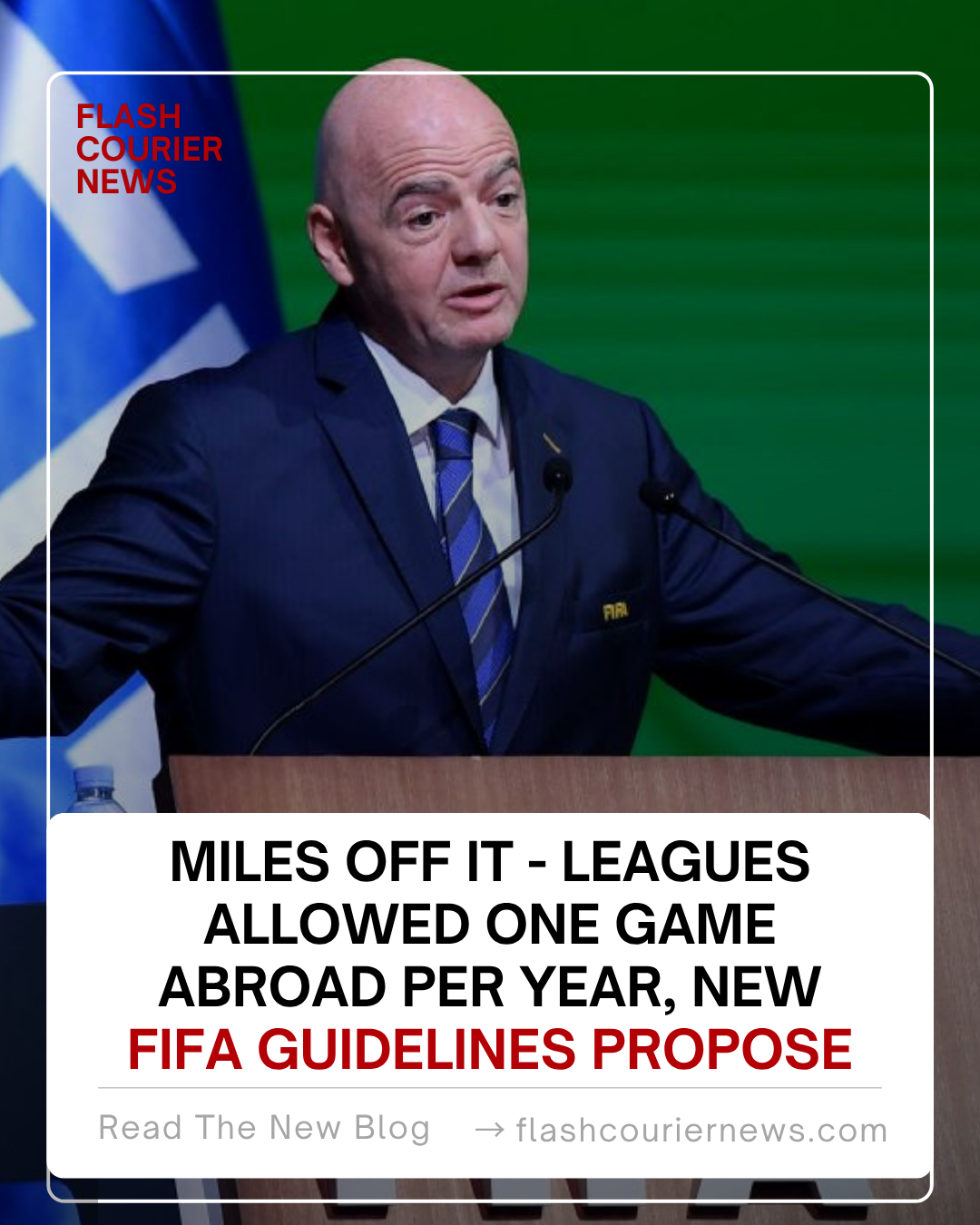
FIFA’s New Guidelines Suggest Matches in Foreign Nations
FIFA’s recent guidelines propose that domestic leagues can organize only one match per season in another country. These proposals significantly increase the likelihood that authorities will approve controversial “international matches.”
FIFA Guidelines Propose, created by a FIFA working group established nearly two years ago, aims to provide clear regulations to de-escalate and clarify the contentious issue while imposing strict limits to restore balance, as claimed.
New FIFA Guidelines Propose that each league can move one top-tier match abroad and allow countries to host up to five matches linked to another division each season.
International Football Gets a Lift
New FIFA Guidelines Propose: This season, La Liga and Serie A planned to stage matches in Miami, USA, and Perth, Australia, which sparked a political dispute between FIFA and UEFA. However, local authorities objected, leading to the cancellation of Villarreal vs Barcelona and Milan vs Como. Additionally, La Liga’s American promoter, Relevant Sports, backed out of proceeding with the game.
The situation has created significant friction among the involved parties. Under the new protocols, officials will only consider relocating a competitive fixture abroad if all key stakeholders approve it, while FIFA retains the final right to veto the decision.
Before submitting any request to FIFA for final approval, the national associations of the clubs involved, along with their confederations and the FA and its confederation, must approve it. Under the new model, decision-makers will not consult domestic leagues on plans to move games abroad, even if the clubs involved oppose the relocation.
It is improbable that the English FA will approve a switch that goes against the Premier League’s wishes. However, a strong alignment between participant and host is not guaranteed in every country, which could result in increased tension in the future.
International Match Rules and Regulations
FIFA may block relocation requests if it has concerns about player welfare, workload, or unnecessary travel.
There is also a demand for assurances that income generated from domestic matches in various countries. Will be redistributed throughout the sporting pyramid. Evidence must be provided that this will not have a negative impact on the host country’s own domestic league. It will also be necessary to demonstrate that plans, and in certain situations compensation. Would be established for the supporters of the participating clubs to attend the match.
Under regulations introduced in 2014, FIFA can only block. An “international match” if the relevant parties fail to follow the correct procedures. Officials have not yet set a date for the next working group meeting. When the meeting takes place, officials expect to consider stakeholder feedback,. FIFA still plans to implement the new guidelines as early as next season.
What Comes Next after FIFA’s New Rules?
A more intrinsic examination of the rules and regulations related to the controversy of international matches. and will not significantly quell the heated debates among fans on the subject. The announcement by La Liga and Serie A of their plans to relocate a league match overseas sparked global outrage.
Despite this, a Madrid derby took place in Riyadh, Saudi Arabia during the Supercopa de España semi-final earlier in the season, and officials still want to try again. However, the Premier League remains firm in its refusal to participate. Meanwhile, rumors suggest that some American owners still want to host Premier League matches in the United States.
These fixtures received UEFA’s approval, but the organization expressed its hesitance. regarding the matter and remarked. FIFA’s plans were based on guidelines that lacked clarity and sufficient detail. FIFA considered the option of banning international games, but ultimately rejected it due to legal concerns. FIFA’s decisions are strongly influenced by its aim to protect MLS and football in the United States as a whole. Clubs would mainly target the American market if leagues allowed overseas fixtures.
Concerns grew about European and South American clubs targeting North American markets. Officials added a clause to limit overseas games per country. Each country can host only five overseas matches per season.













Leave a Reply