
The FIFA World Cup in 2026 will be unlike any previous competition. The United States, Canada, and Mexico will co-host for the first time. Additionally, the number of teams increases from 32 to 48, making this the biggest World Cup ever.
Here are all the details you need to know about the 2026 World Cup, including host cities, the new format, important dates, and travel advice, if you’re a fan hoping to attend or watch from home.
Host Countries and Cities
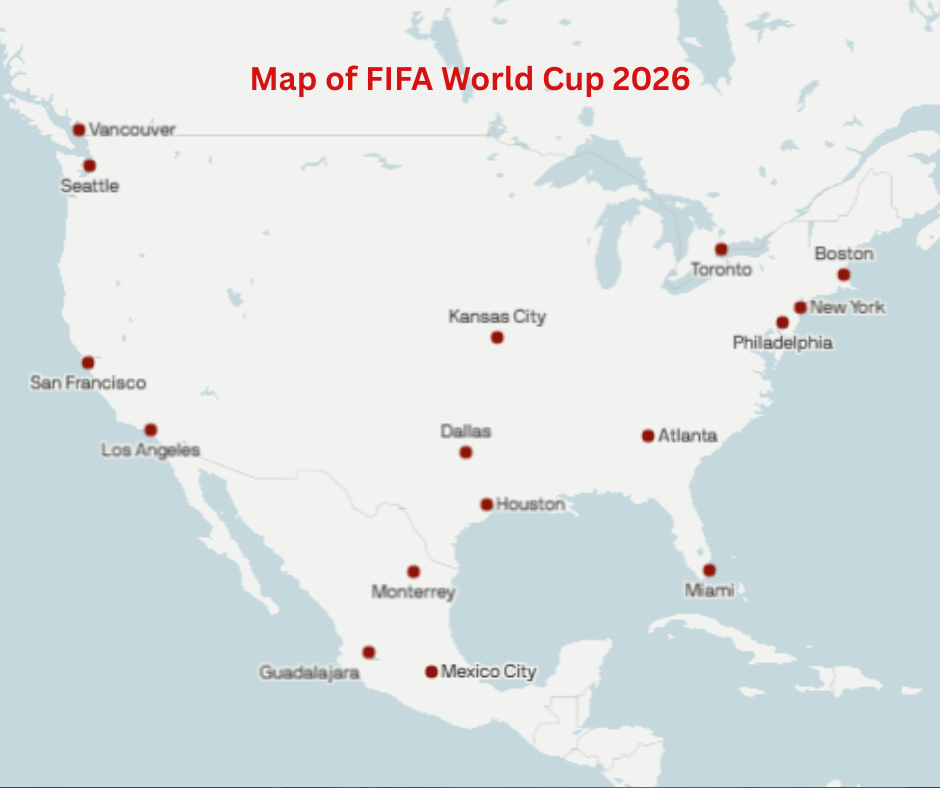
United States (11 cities)
New York/New Jersey, Atlanta, Boston, Dallas, Houston, Kansas City, Los Angeles, Miami, Philadelphia, San Francisco, and Seattle
Mexico (3 cities)
Mexico City, Monterrey, and Guadalajara
Canada (2 cities)
Vancouver and Toronto
In order to minimize travel during the group stage, teams will remain in regional “hubs” (West, Central, and East). Before making travel arrangements, find out which hub your preferred team is assigned to.
New Tournament Format (48 Teams)
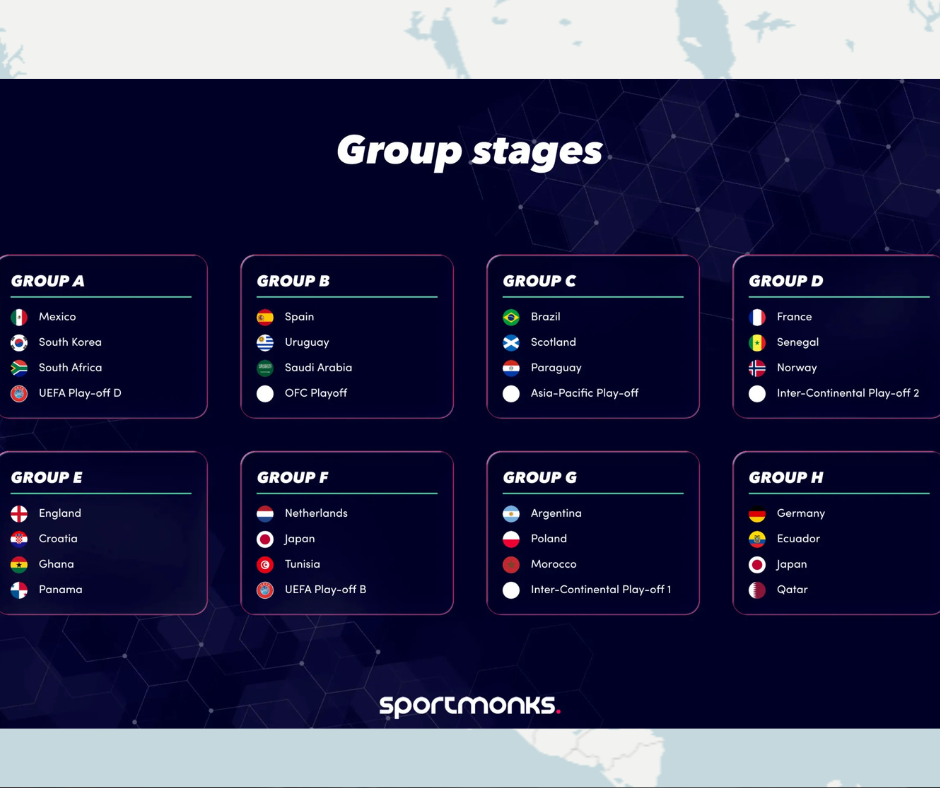
The previous structure (32 teams, 8 groups of 4) has been eliminated. This is how 2026 operates:
- 12 groups of 4 teams each
- Top 2 from each group advance → 24 teams
- Plus, the 8 best third-place teams advance → 32 teams total in the knockout round
- Total matches: 104 (up from 64 in 2022)
- Finalists will play 8 matches instead of 7
Knockout stages:
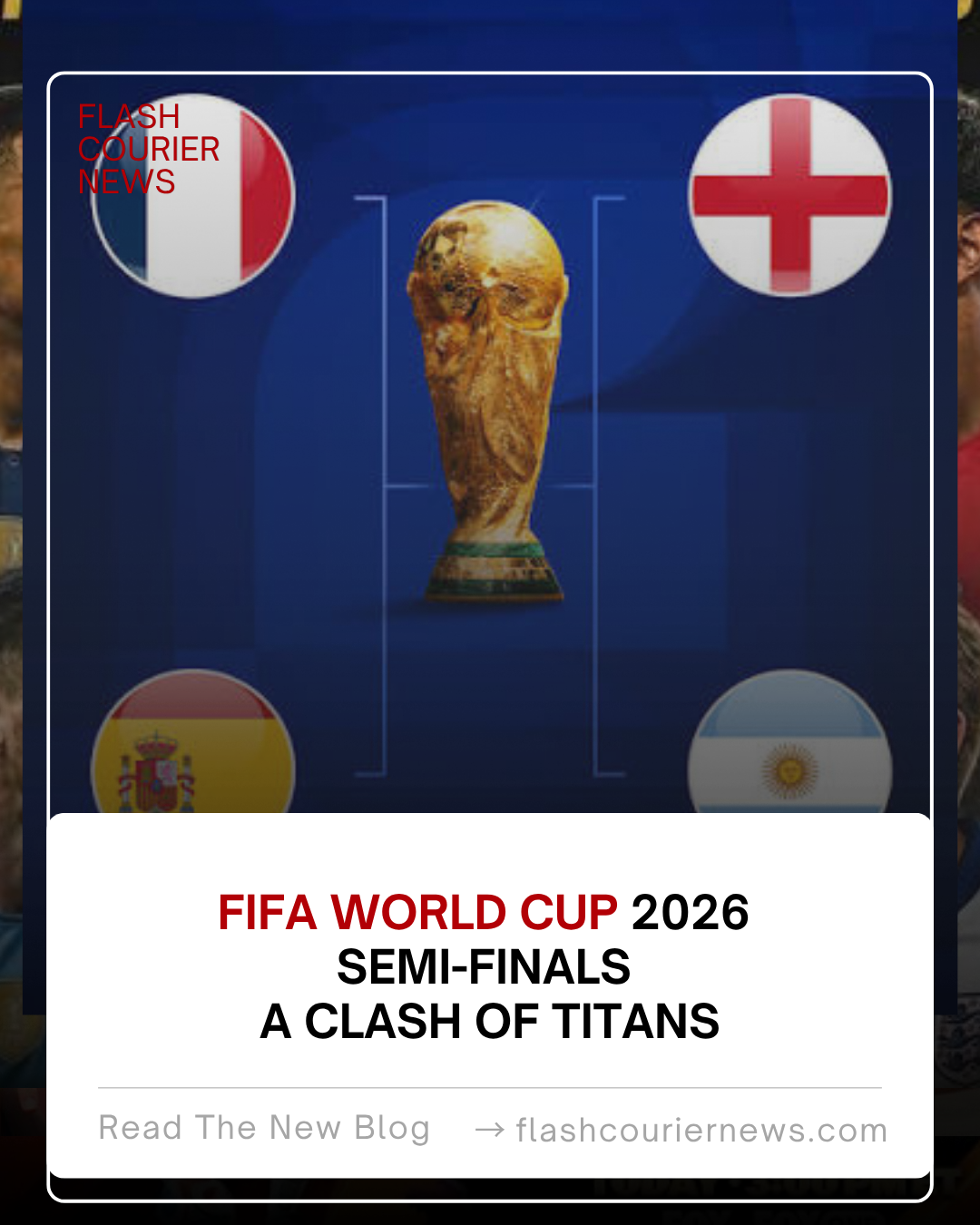
Round of 32 → Round of 16 → Quarterfinals → Semifinals → Final
Some teams won’t find out if they’ve advanced until all group games are over due to the “best third-place” rule. If you are attending in person, prepare for schedule uncertainty.
Dates (Confirmed)
| Event | Date | Venue |
| Opening match | June 11, 2026 | Estadio Azteca, Mexico City |
| Canada’s first home match | June 12, 2026 | Toronto |
| USA’s first match | June 12, 2026 | SoFi Stadium, Los Angeles |
| Final | July 19, 2026 | MetLife Stadium, New Jersey |
The first stadium to host three World Cup opening games is Estadio Azteca (1970, 1986, 2026).
Stadiums to Watch
- Mexico City’s Estadio Azteca has a capacity of more than 87,000. Player endurance is impacted by the high altitude (2,240m).
- Constructed for the NFL, SoFi Stadium is located in Los Angeles. For the World Cup, FIFA replaced the artificial turf with natural grass.
- Vancouver’s BC Place is a waterfront building with a retractable roof.
- Mercedes-Benz Stadium in Atlanta has a “pinwheel” roof and a 360° LED halo board.
Under FIFA supervision, all artificial turf stadiums—Seattle, Atlanta, and Boston—have temporarily switched to natural grass.
Qualification Spots by Region
| Region | Spots |
| Asia (AFC) | 8.5 |
| Africa (CAF) | 9.5 |
| North/Central America (CONCACAF) | 6 (including 3 hosts) |
| South America (CONMEBOL) | 6.5 |
| Oceania (OFC) | 1.5 (first direct spot ever) |
| Europe (UEFA) | 16 |
Asia’s Jordan and Uzbekistan, as well as possibly the first Oceanian team outside of New Zealand, are anticipated to qualify for the first time.
Estimated Costs & Travel Tips for Fans
- Expected visitors: Over 6 million international fans.
- Hotel occupancy in host cities: Already above 90% for match weeks in Monterrey and Kansas City.
- Estimated economic impact: $14 billion across all three countries.
- Visa & entry: FIFA PASS will enable borderless travel between the United States, Canada, and Mexico by connecting match tickets to travel permits.
Where to Watch (Global Broadcast)
USA: FIFA+ streaming, FOX, and Telemundo
Canada: CTV and FIFA+
Worldwide: At a World Cup, 8K ultra-HD and virtual reality headsets will be accessible for the first time.
Social media: Each stadium has a “Creator Hub” for behind-the-scenes content aimed at younger audiences
FIFA anticipates 5 billion viewers overall on all platforms.
The World Cup in 2026 is a huge experiment: Can 104 games, 3 nations, and 48 teams coexist peacefully? Yes, according to early indications, but fans should be ready for more travel, increased expenses, and a longer tournament than in the past.
This World Cup will be historic, not only for the football but also for how it unites three countries, regardless of whether you support a long-standing powerhouse or a new qualifier.




Leave a Reply