
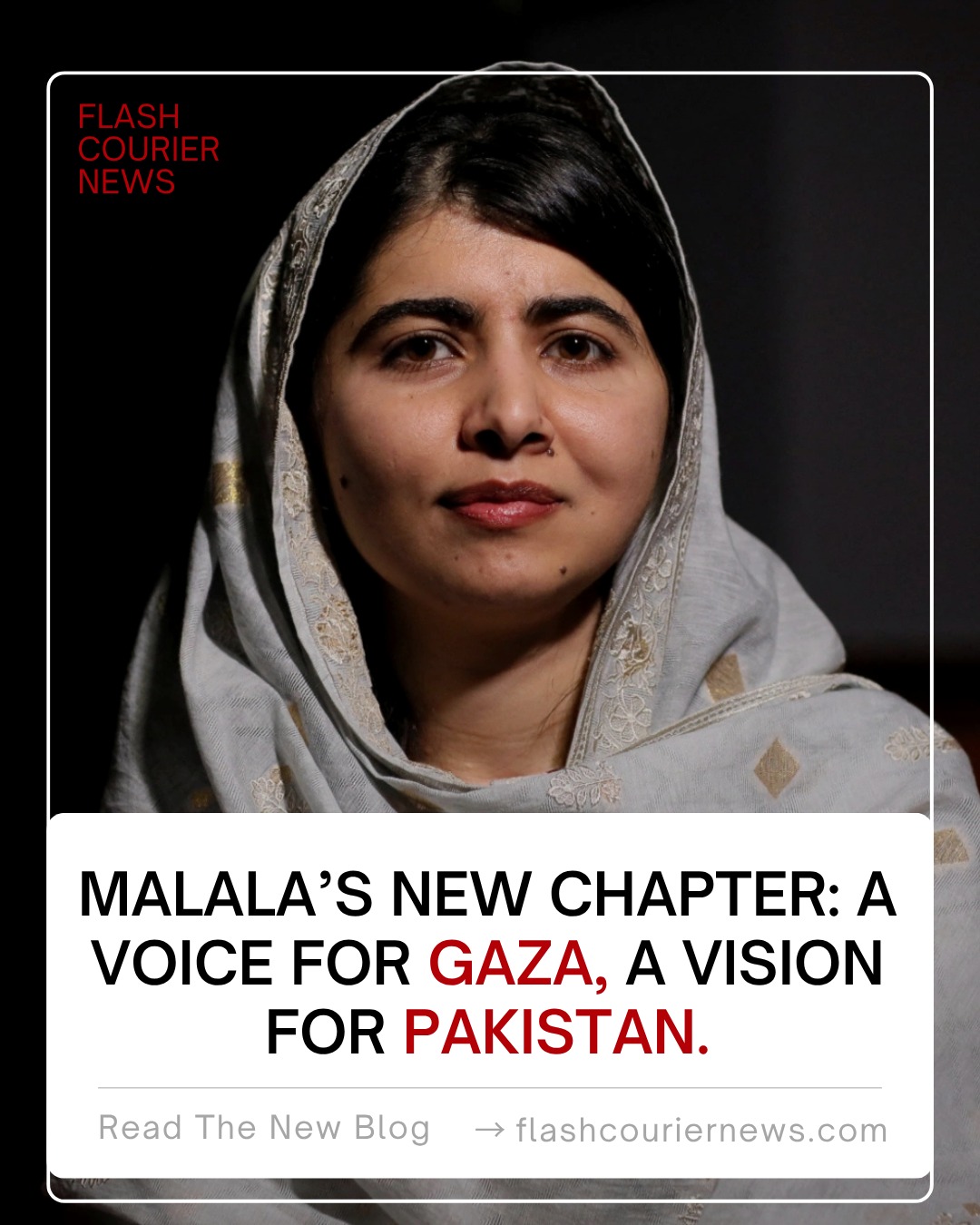
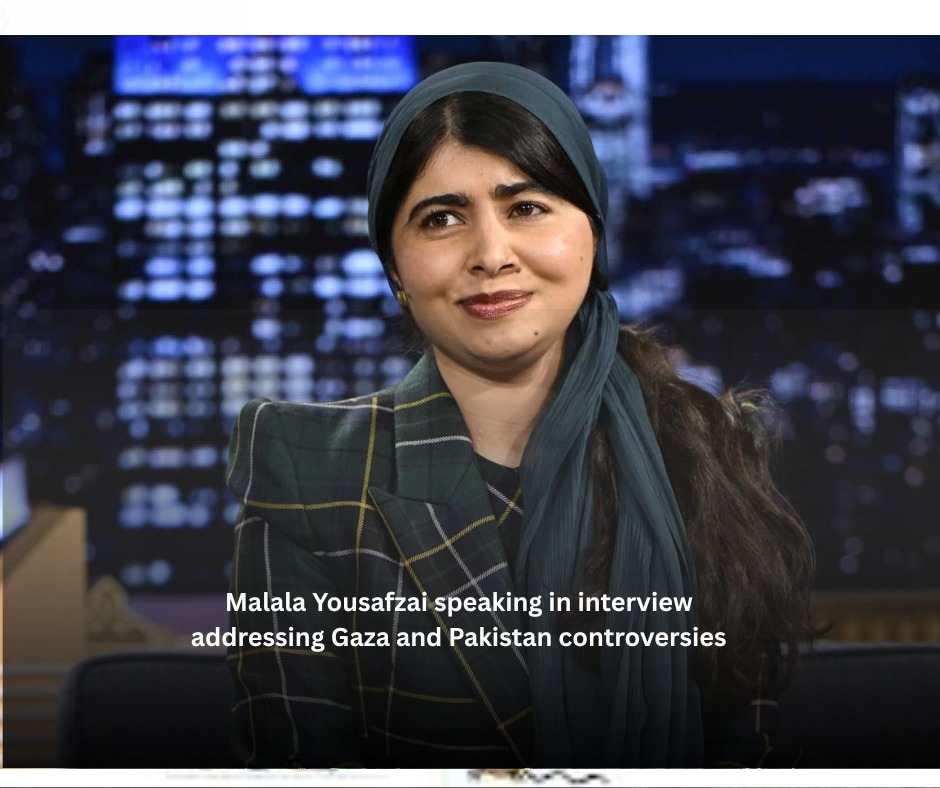
Globally, Malala’s Gaza speech and her relationship with Pakistan have generated a great deal of controversy. In her advocacy, the Nobel Peace Prize winner and global celebrity addressed the most contentious issues, such as claims that she was a foreign agent, her position on the genocide in Gaza, her marriage, and her complicated relationship with Pakistan.
Malala addressed all criticism head-on in an honest and transparent discussion. The main findings from that interview are analyzed in this blog along with their implications for Pakistan, Gaza, and Malala’s legacy.
The “Agent” Allegation
Malala refuted the long-held belief that she works for the CIA or MI6, saying that anyone who gains notoriety in Pakistan is referred to as an agent.
Her response:
- Abdul Sattar Edhi and Nobel laureate Kailash Satyarthi were also suspected.
- She underlined that a very tiny minority is the source of this severe criticism.
- She has never thought that her nation despises her because she was raised in a loving and prayerful environment.
“When you become famous in Pakistan, they call everyone an agent.” Malala Yousafzai
The Negative Image of Pakistan
Malala was questioned on why Pakistan’s struggles with terrorism are often highlighted on her international platform rather than the country’s inherent beauty and culture.
Her response:
- Everywhere she goes, people tell her they learned about the beauty of Shangla and Swat from her book.
- The true face of Pakistan is not terrorists but rather the resilient people who fight for peace and make sacrifices.
- She believes that good rather than negative attention was drawn to her Nobel Prize win.
🇵🇰 Reporter viewpoint: You make a good point. Many Pakistanis believe that the nation is misrepresented abroad. It is worthwhile to consider Malala’s claim that she emphasizes the resilience of ordinary Pakistanis rather than just the issues.
Comparison with Greta Thunberg
The interviewer pointed out that Malala is at ease in conference rooms, whereas Greta Thunberg is subjected to police abuse outside of presidents’ offices.
Malala clarified that there are various types of advocacy. Although she is willing to engage in civil disobedience, her current priorities are systemic change, such as engaging with politicians to raise funding for education.
She compared it to the women’s suffrage campaign, in which some people engaged in violent protests while others engaged in civil negotiations to further the same goal.
Silence on Gaza and the Hillary Clinton Controversy
Malala’s alleged silence on the genocide in Gaza was one of the most contentious debates.
In response, Malala disclosed that she has been giving speeches about Palestine since 2014, contributing over 30 million rupees through the Malala Fund after donating her first $50,000 prize to local schools.
She displayed screenshots of her tweets that used the term “genocide” and called for a ceasefire.
Malala said a widely shared image of herself with Hillary Clinton was “absolutely false” and manipulated.
She emphasized that she was simply an executive producer of a Broadway play about Islamophobia and that she was unaware of the other producers’ political ties.
She further clarified that she was never with Clinton at that event.
Pakistan’s Politics and Imran Khan
Malala acknowledged that she is not an authority on all matters about domestic politics in Pakistan.
She did, however, lament Pakistan’s democracy’s weakness, pointing out that three prime ministers have changed.
She made it clear that Imran Khan is still incarcerated and that she supports Pakistanis fighting for justice since girls’ education depends on a robust democracy.
Marriage, Jeans, and Hypocrisy
In response to accusations that she was hypocritical for getting married after previously opposing the idea of marriage, Malala emphasized that she never supported cohabitation without marriage.
Rather, she questioned why marriage often forces girls to abandon their dreams.
She explained that she has met a nice spouse with whom she shares equal responsibilities and that marriage has not impacted her career.
Regarding the “jeans controversy,” Malala recalled that when her siblings wore jeans, nobody reacted, but when she did, #ShavenMalala went viral.
She refused to change into different clothes and informed her father that this was her choice.
Mental Health and the Bong Incident
Malala talked about the controversy surrounding her memoir, in which she claimed to have tried a bong while in college.
She clarified that although she doesn’t use drugs or alcohol, a single trial gave her a serious panic attack and made her feel as though the Taliban had returned. For months, she experienced flashbacks.
Seven years after her attack, she overcame the societal stigma that therapy is solely for “crazy” people by going to treatment.
She currently offers mental health assistance at the Pakistani schools that her charity manages.
Work in Pakistan and Future Plans
Malala discussed her practical work in Pakistan in response to charges that she is disengaged from the nation.
Her achievements:
| Initiative | Impact |
| Malala Fund investment | 5 billion rupees invested in Pakistan |
| Teacher training | 200 female teachers trained |
| School in her community | 22 girls have completed 12th grade |
| Free transportation | Provided in 10 districts for girls |
| Sports program (“Recess”) | Funded women’s football and cricket leagues |








Leave a Reply