
Over the past ten years, online fashion shopping has grown significantly. What began as just purchasing clothing online has developed into a technologically advanced experience.
The fashion industry is moving into a new digital era, complete with virtual fitting rooms and artificial intelligence. The main trends influencing the direction of online fashion retail are examined in this article.
Artificial Intelligence in Fashion
Online fashion retailers are increasingly relying on artificial intelligence. To create tailored recommendations, AI examines browsing patterns, previous purchases, and consumer preferences.
How AI helps shoppers:
- Finds clothes that match your style
- Suggests sizes based on previous purchases
- Shows items you are likely to actually buy
AI is already used by Amazon and ASOS to power their “recommended for you” sections. Stitch Fix is an online styling service that sends customised clothing boxes using AI and human stylists.
Industry analysts predict that the global market for AI in fashion will reach $4.5 billion by 2027.
Virtual Try-On Technology

The inability to try on clothing before purchasing is the main issue with online fashion shopping. Time wasted, frustration, and returns result from this.
This issue is resolved by virtual try-on technology.
How it works:
- Uses augmented reality (AR) on your phone or computer
- Overlay clothing onto your live image or photo
- Shows how an item fits your body shape
Brands leading the way:
- Gucci allows users to try on sneakers via AR on their app
- Warby Parker lets customers try on glasses virtually
- Zara has introduced AR displays in stores and online
For brands that use virtual try-on effectively, return rates can drop by as much as 25%.
Personalised Shopping Experience
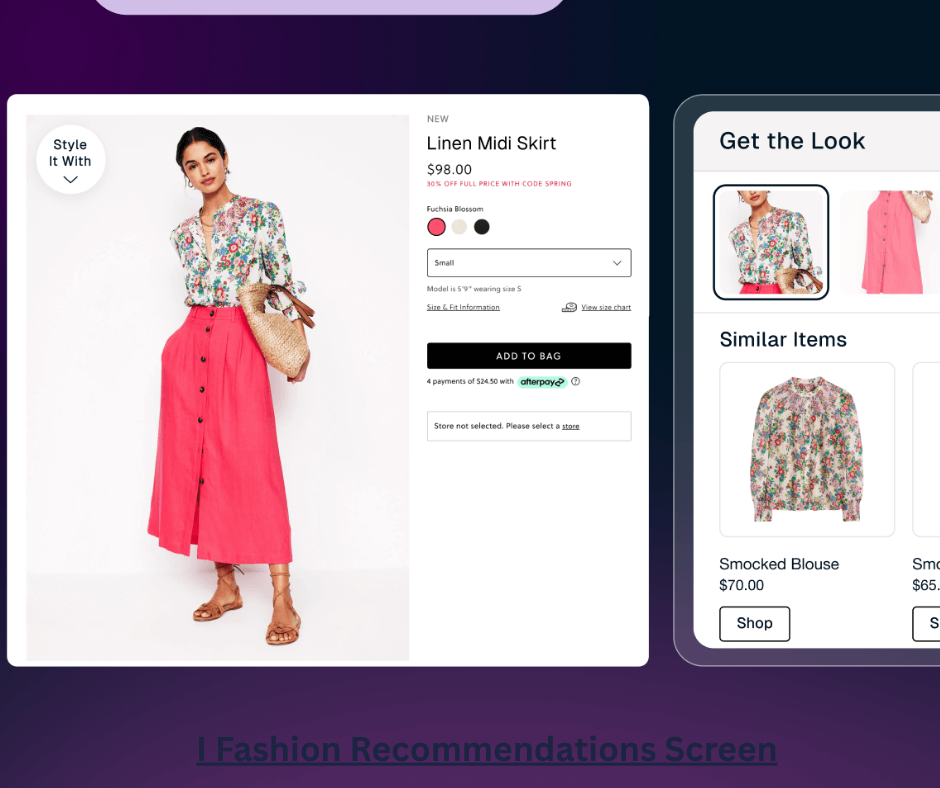
In the upcoming years, online fashion will be shaped by personalisation. Shopfronts that are one-size-fits-all are vanishing.
What personalisation looks like:
- Curated collections based on your style
- Personalised fashion advice and outfit suggestions
- Emails showing items you actually want
| Personalization Feature | Benefit to Shopper |
| Style quiz at signup | Better initial recommendations |
| Browse history tracking | Relevant suggestions every visit |
| Size preference memory | No re-entering measurements |
| Outfit completion alerts | “You might also like” matching items |
Before displaying any products, the more recent fashion app Yes asks users to rate hundreds of ensembles to determine their precise preferences.
Sustainable and Ethical Fashion
Environmental issues are becoming more and more important to consumers. There is opposition to fast fashion. Sustainable practices are now required.
What sustainable online fashion includes:
- Eco-friendly fabrics (organic cotton, recycled polyester)
- Transparent supply chains (knowing where clothes are made)
- Ethical production (fair wages, safe conditions)
Brands doing it right:
- Patagonia donates 1% of sales to environmental causes
- Reformation tracks and displays its carbon footprint per item
- Everlane shows exactly how much each item costs to make
Before making a purchase, 67% of fashion consumers claim to take sustainable materials into account.
Social Media and Influencer Shopping
Social media sites are turning into places to shop. You can now purchase clothing without ever leaving Instagram or TikTok.
How social commerce works:
- Influencers tag products in posts
- Clicking the tag opens a purchase page
- Checkout happens within the app
Platforms leading the way:
- Instagram Shops
- TikTok Shop
- Pinterest Buyable Pins
Fans want to purchase the exact item as soon as they see a reliable influencer wearing it. We refer to this as “shoppable content.”
Social commerce sales in the US alone are projected to reach $80 billion by 2026.
Faster Delivery and Smart Logistics
These days, delivery speed is a competitive advantage. Clothing is what customers want tomorrow, not next week.
What smart logistics includes:
- Local distribution hubs near major cities
- Same-day delivery in some areas
- Easy, often free, returns
Brands setting the standard:
- Amazon Prime offers free two-day (or same-day) delivery
- Zalando provides one-hour delivery in select European cities
- ASOS has free next-day delivery for premium members
30-40% of online clothing orders are returned, compared to 5-10% in physical stores. Faster logistics help manage this.
Conclusion
Technology, customisation, and sustainability will be the main drivers of online fashion shopping in the future.
Customers will benefit from quicker delivery, AI-powered suggestions, and virtual try-ons. Businesses that make these investments will gain the loyalty of consumers. Those who disregard them will regress.
Online shopping is going to get smarter, more interesting, and more convenient, whether you’re a casual buyer or a fashion enthusiast.







Leave a Reply